You are what you eat - this principle applies not only to people! One of the most important elements of animal breeding is their feeding. A proper diet directly affects health, condition and production performance, including the laying rate of hens, the milk yield of cattle and the meatiness of pigs. The quality of feed turns out to be at least as important as its quantity! The feed mixture must be adapted to the needs of a given animal, so that it provides balanced amounts of the most important nutrients: sugars, protein, fats, vitamins and minerals. To provide farm animals with a proper diet, a responsible breeder does not have to rely exclusively on ready-made feeds available for sale.
An alternative to commercial feed mixtures is the independent production of roughage and concentrated feeds. It allows the breeder to maintain full control over the feeding process: from the selection of raw materials, through the method of their processing, to adjusting the proportions of individual components to the current needs of the animals. At the same time, by focusing on self-sufficiency, it is possible to reduce livestock feeding costs.
Producing feed for your own needs can generate large savings! Independent production of feed mixtures makes it possible to avoid the margins imposed by external manufacturers of ready-made feeds, as well as intermediaries. Costs decrease even more if raw materials from crops grown on the same farm are used. This is a great way to effectively use agricultural produce that does not meet standards for the food industry, is not suitable for direct consumer sale, or whose prices at procurement points are unsatisfactory. A beneficial solution is also to allocate lower-quality land to the cultivation of forage crops, whose requirements are generally lower compared to species and varieties intended for human consumers.
Selection of raw materials for feed production
Self-sufficiency requires experience and a professional approach. Knowledge of the nutritional needs of individual animals is of key importance. Different poultry species have different nutritional requirements, as do dairy and beef cattle, pigs and horses. Not only the animal species matters, but also its age, breed and the purpose of the breeding. For example, laying hens have a much greater need for calcium and phosphorus compared to broilers, which in turn require a diet richer in protein and energy raw materials. In the case of cattle and pigs, young animals need easily digestible feed with a high content of vitamins, minerals and amino acids.
The diet must be varied and properly balanced, which is why multi-component feed mixtures are used in animal breeding. The ability to compose them according to the needs of specific animals is the key to success! The composition of complete feed mixtures should be dominated by cereals such as wheat, barley, oats or maize. Ingredients rich in carbohydrates, providing energy, should be supplemented with protein components, as well as vitamin-mineral premixes, feed chalk and other additives.
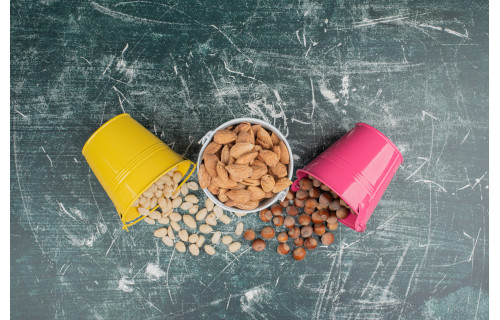
Animals do not live on grain alone – apart from ingredients providing energy, the feed mixture must contain an appropriate amount of protein. A conventional source of protein in feeding farm animals are legumes such as lupin, peas, faba beans, alfalfa or soybeans, but that is not the end of the possibilities. An alternative is oil cake, a by-product of oil pressing.
Professional screw presses make it possible to cold-press liquid fats from the seeds of oil plants such as sunflower, rapeseed, soybeans or walnut. A valuable “waste” of this process is precisely oil cake, high-protein press cake ideal as an additive to independently prepared feed mixtures for practically all farm animals. In addition to protein, it also contains carbohydrates, mineral salts and vitamins, which do not break down thanks to the use of cold pressing at low temperatures.
Other by-products of the agri-food industry can also be used as a source of protein in feed, e.g. dried distillers grains, brewer's spent grain and cereal germs.
How to produce feed for your own needs? Choosing the production method
Not only the composition of the feed matters, but also the way it is produced. In other words, what matters is not only what raw materials the feed is made from, but also how these raw materials are processed.
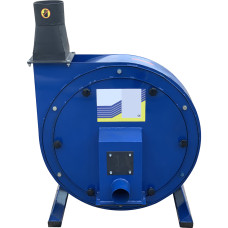
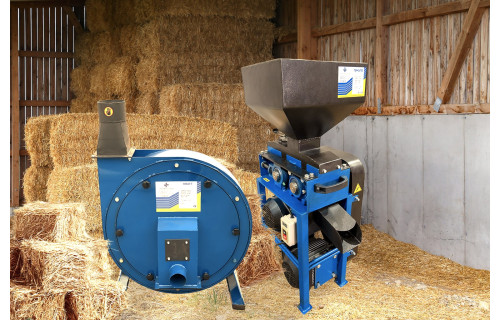
The production process, related to the proper mechanical processing of raw materials, significantly affects the digestibility and assimilability of feed, and thus the effectiveness of animal feeding and the profitability of breeding. The use of appropriate equipment, such as grinders, crimpers, extruders or mixers, changes grain, straw and other agricultural raw materials into complete-value feed.
Individual feed production machines transform raw materials in different ways.
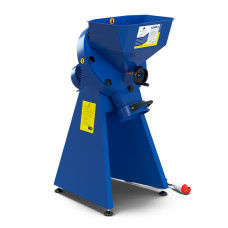
- Grinders – grind cereal grains into smaller particles, i.e. meal. As a result, the specific surface area of the feed exposed to the action of enzymes and digestive juices in the animals' digestive system increases. Thanks to this, the digestibility of starch and protein contained in the input raw material is clearly improved. Grinders are suitable for processing not only cereals such as wheat, barley or oats, but also maize, soybeans and other grains.
- Chaff cutters – play a key role in the production of roughage for ruminants. They are used for chopping straw, hay and dried green forage, e.g. alfalfa or clover.
- Crimpers – crush grain, significantly increasing feed digestibility. This method of processing raw materials is particularly beneficial in the preparation of feed for cattle. Crimped grain stimulates rumen function and prevents acidosis in ruminants, while at the same time the nutrients it contains become more assimilable. Crimpers are characterized by very high efficiency: they make it possible to reduce electricity consumption compared to the use of grinders, lowering feed production costs. Moreover, they minimize dust content, which translates into higher feed quality.
- Extruders – these are advanced devices combining mechanical processing with the action of high pressure and temperature. Cereal and legume grains are transformed into easily digestible, expanded granules with assimilability reaching as much as 90%. The extrusion process eliminates most pathogens and anti-nutritional compounds, such as tannins, lectins, alkaloids and glucosinolates, thanks to which extruded feed is perfectly suitable for young and weakened animals.
- Pellet mills – transform loose mixtures of ground raw materials into even pellets, i.e. pelleted feed. This makes it possible to combine base ingredients with additives such as premixes and vitamin supplements. The resulting product is uniform in terms of composition and fraction, ideal for mechanical dosing, as well as easy to transport and suitable for long-term storage.
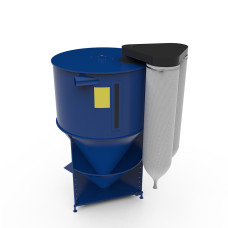
- Feed mixers – allow all components of feed mixtures to be mixed thoroughly. Thanks to them, a product with a homogeneous composition is created, each portion of which provides an identical set of nutrients in balanced proportions.
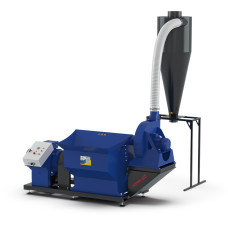
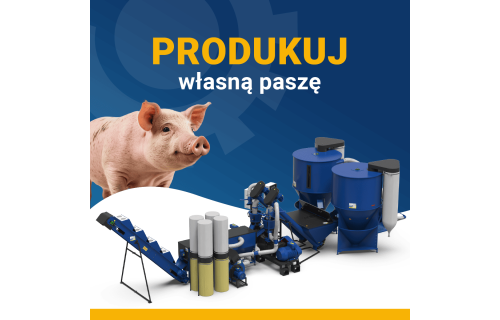
Instead of buying several devices separately, it is worth considering investment in one of the ready-made feed production lines. These are professionally composed sets for efficient grinding, dedusting, cleaning and fractioning of grain raw materials.
Legal production of your own feed – necessary formalities
Producing feed exclusively for your own needs does not exempt the breeder from completing the appropriate formalities! Even if the farmer intends to feed only their own animals with an independently produced product (or products), they must report the activity to the local District Veterinary Officer (PLW) in order to obtain the so-called feed number and entry in the register of entities operating on the feed market. The application must be submitted at least 30 days before the start of feed production, attaching proof of payment of the stamp duty (17 PLN) to the relevant Commune Office or City Office. The aforementioned feed number serves as the feed producer's identifier in contacts with the Veterinary Inspection and when purchasing raw materials for feed production from external suppliers.
A breeder producing feed for their own needs is required to keep simple records of raw materials and feeds. The documentation should include the origin of raw materials and their current use, and also specify which groups of animals the finished feed goes to. At every stage of production, it is necessary to comply with hygiene and safety rules. Both the finished feed and the raw materials needed for its production must be stored in clean, dry places free from pests. The rules for storing feed grain are the same as for cereals intended for human consumers. It is important to dry the grain after harvest, before placing it in storage, to a moisture content below 14%, e.g. using a mobile grain dryer. During storage, the moisture content and temperature of the raw material should be monitored. To maintain proper parameters, grain aeration and its regular mixing are recommended. Raw materials must be stored away from fertilizers, plant protection products and other chemicals. Grain infected by pathogens, attacked by pests or showing signs of mold must be immediately removed from storage and eliminated from the feed production process.
Is independent feed production profitable?
The master's eye fattens the horse! This principle also applies to other farm animals. A breeder who takes care of the composition, the process of preparing feed and its dosing on their own can be sure that they are providing their animals with the very best. Well-fed livestock enjoys good health, grows faster, and produces more milk or eggs. Breeding efficiency increases, while animal feeding costs decrease – especially if the raw materials for feed production come from the same farm. The condition for success is a well-thought-out selection of the proportions of individual feed components and their proper processing using devices that improve the digestibility and assimilability of grain.