How to turn stacks of cardboard into pure profit? A guide to modern balers
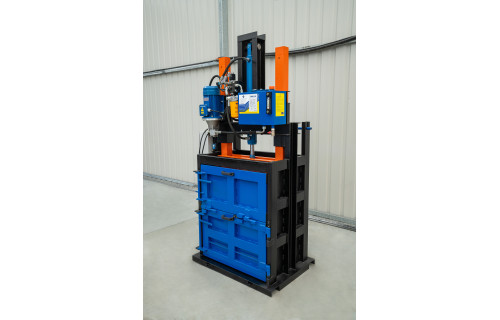
Every warehouse, store, or production facility owner knows this sight: a mountain of scattered cardboard boxes that takes up more and more valuable space every day. Packaging waste is not only an aesthetic problem, but above all a logistical and financial one.
The solution that is revolutionising waste management in a company is the waste paper recycling machine, commonly known as a baler. Find out why your company needs one and how to choose a model that will best pay for itself.
What is a paper baler?
A paper baler is a hydraulic device that reduces the volume of paper waste by up to 90%, turning it into compact bales weighing from 40 to 300 kg. This allows savings of up to 70% on waste logistics costs.
Why is a baler an investment that pays off?
In the business world, time and space mean money. A waste paper press allows for a drastic reduction in waste volume (by up to 90%), which translates into concrete savings:
- Reduction of transport costs: Instead of paying for the removal of "air" in loosely thrown cardboard boxes, you transport heavy, compacted bales.
- Reclaiming space: An organised warehouse means safer work and more room for goods.
- Ecology and image: Professional waste management is a strong argument in conversations with contractors who care about ESG standards.
- Profit from raw material sales: Well-pressed waste paper is more readily purchased by recycling companies and achieves better prices.
Overview of solutions: Which paper baler will be the best?
The choice of the right device depends on the amount of waste generated and the available space. TechnoMaszBud offers a wide range of waste paper balers, which combine reliability and intuitive operation.
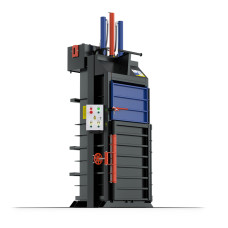
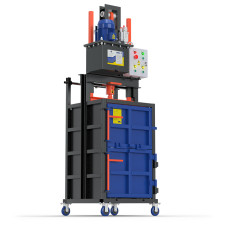
1. BM-10 Opti – Compact power for smaller outlets
If you run a grocery store, pharmacy, or small workshop, the BM-10 Opti model will be a perfect fit. This is a device that proves that an efficient baler doesn't have to take up half a warehouse.
- Application: Ideal where every square metre counts.
- Advantage: Low energy consumption and simplicity of operation.
- Check details: Waste paper baler BM-10 OPTI
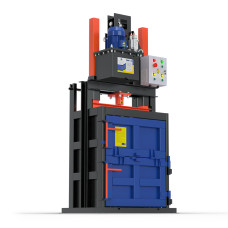
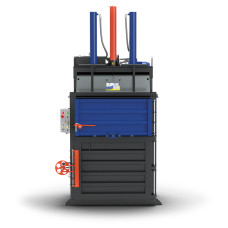
2. BM-28 – Heavy calibre for professionals
For production plants and large logistics centres, where waste paper is "produced" at an express pace, special-purpose equipment is needed. The BM-28 is a machine that knows no compromises.
- Application: Large quantities of cardboard, film, and paper.
- Advantage: High pressing force that allows creating maximally compacted bales, ready for direct transport to a paper mill.
- Check details: Waste paper baler BM-28
What to pay attention to when purchasing a waste paper press?
When choosing a device, don't look only at the price. The parameters that will affect your daily comfort of work matter:
- Pressing force: The greater it is, the more compacted the bale and the fewer forklift runs.
- Size of the feed opening: If your waste consists of large boxes, choose a machine that does not require them to be cut up beforehand.
- Safety: A modern waste paper recycling machine must have CE certificates and safeguards protecting the operator against accidental activation.
Worth knowing: Investment in a baler often pays for itself after just a dozen or so months of use, taking into account the savings on waste logistics alone.
Summary: Time for order in your business
Waste management doesn't have to be a burdensome obligation. With a properly selected press, waste paper ceases to be rubbish and becomes a secondary raw material that generates profit. Regardless of whether you need a compact BM-10 model or an industrial BM-28, you are investing in cleanliness, safety, and real money.
FAQ – Most frequently asked questions about balers
What is a baler and how does it work?
A baler (or waste paper press) is a hydraulic device used to compress loose waste (cardboard, film, paper) into compact, cuboid blocks called bales. The process involves loading material into a chamber, where a piston presses the raw material with great force, which is then manually or automatically bound with tape or wire.
What materials can be pressed in a baler?
Most modern recycling machines are universal. In addition to standard waste paper and cardboard, balers such as the BM series models can handle:
- stretch film and LDPE,
- PET bottles,
- aluminium cans,
- textile offcuts.
How much can you save with a waste paper press?
Investing in a baler allows you to reduce waste management costs by as much as 70–80%. The savings result from less frequent container collections (you pay by weight, not by volume) and the elimination of "air charges". Additionally, pressed waste paper in bales weighing over 200–300 kg often qualifies for resale as a fully-valued secondary raw material.
How to select the pressing force of a baler?
The choice depends on the type and quantity of waste:
- Up to 10 tonnes (e.g. BM-10): Sufficient for soft cardboard and film in small and medium-sized stores.
- Above 15–18 tonnes (e.g. BM-28): Necessary for hard corrugated cardboard, cans, and wherever we want to obtain bales of "commercial size", optimal for truck transport.
Does operating a baler require qualifications?
Operating vertical balers is simple and intuitive, and does not require specialist UDT qualifications (although on-the-job training should always be completed). Modern devices are equipped with safety systems, such as door-open locks during operation and emergency stop buttons (E-stop).