Pellet and coal. The Great Smog. Seventy years ago London almost suffocated
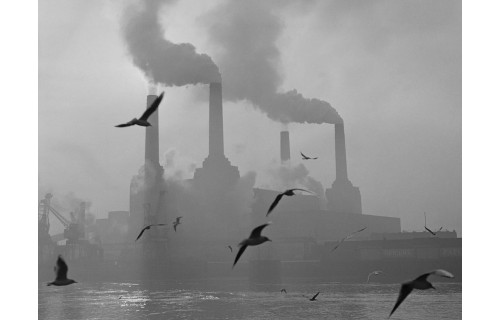
The Great Smog. Seventy years ago London almost suffocated
In 2022 the environmental community will commemorate the 70th anniversary of the famous “Great London Smog”, which occurred in London on 5–9 December 1952 and claimed the lives of at least 12 thousand people, while another 100 thousand developed chronic illnesses… The cause of the disaster was not ordinary English fog, but the heating of homes with wood and coal.

Let us recall that at the beginning of December 1952 a cold fog descended over London. Due to exceptionally low temperatures, residents began using more coal for heating than usual. Around the same time, the process of replacing municipal electric transport (trams) with diesel-engine buses was completed; at that time they were not equipped with either particulate filters or catalytic converters. Combustion products in the air reached extraordinary concentrations within a few days. The fog was so dense that it hindered car traffic. Some townspeople, after leaving their homes, could not find their way back. Initially, the reaction of residents was calm, as fog is not uncommon in London. But during the time of the “great smog”, London hospitals quickly filled with victims of respiratory diseases, and mortality in the city began to rise. At first these facts were not publicized, but after a few days it turned out that funeral homes had run out of coffins.

People changed their attitude toward air pollution. The disaster made the world realize that this problem poses a direct threat to human life. New environmental standards were adopted limiting the use of ‘dirty’ fuels in industry and prohibiting emissions containing soot. In 1956, the first “Clean Air Act” was passed, requiring the use of smokeless fuel, especially in densely populated areas.

What is the danger of heating with coal and wood
The problem of non-ecological heating remains relevant in the 21st century. According to the World Health Organization WHO, about three million people die every year precisely because they heat with coal or live next to such buildings. Another problem of heating with coal and wood is the increased fire hazard. “Stove” fires are the third most common after careless handling of fire. It is necessary to create additional administrative and economic incentives to eliminate the harmful effects of stove heating in the country as soon as possible.
Pellet heating as an alternative
First of all, experts recommend replacing firewood and coal with pellets. Simply put, these are compressed and dried granules or “sticks”, and even whole “logs” made from a variety of raw materials – from sawdust and shavings to grain husks, reeds and peat.
- Pellets are made from safe and environmentally friendly materials that do not harm health.
- Pellet heating has good safety properties. Granulated fuel from natural raw materials.
- In most cases, pellet heating is characterized by low ash content (there are exceptions, e.g. in the case of peat pellets).
- When using pellets, it is possible to utilize the ash in the future.
- Heating a private or suburban building with pellet granules does not require a connection permit (unlike gas-powered options).
- There is no need to allocate a separate building for pellet storage – it is enough to choose a dry room.
- Pellet boilers are characterized by high efficiency.
- In most cases, pellets do not emit odors during combustion.
- Pellets have high calorific value.
- Boilers operating on such biofuel are very convenient to use – a person needs to participate in their operation no more than once a week, as all processes are carried out automatically.