
-
55 - 57,2 kWup to 3 t/h
-
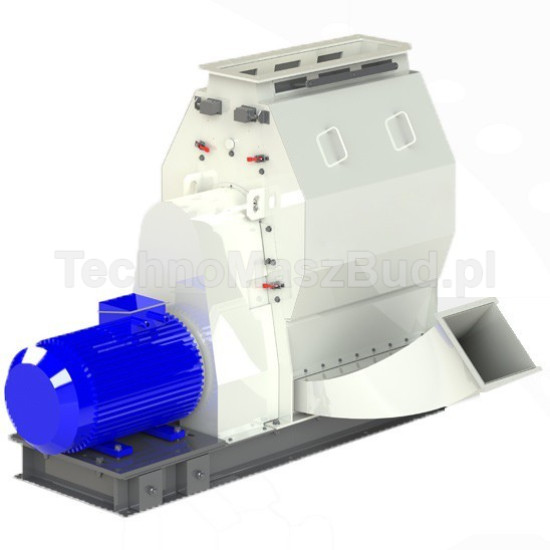
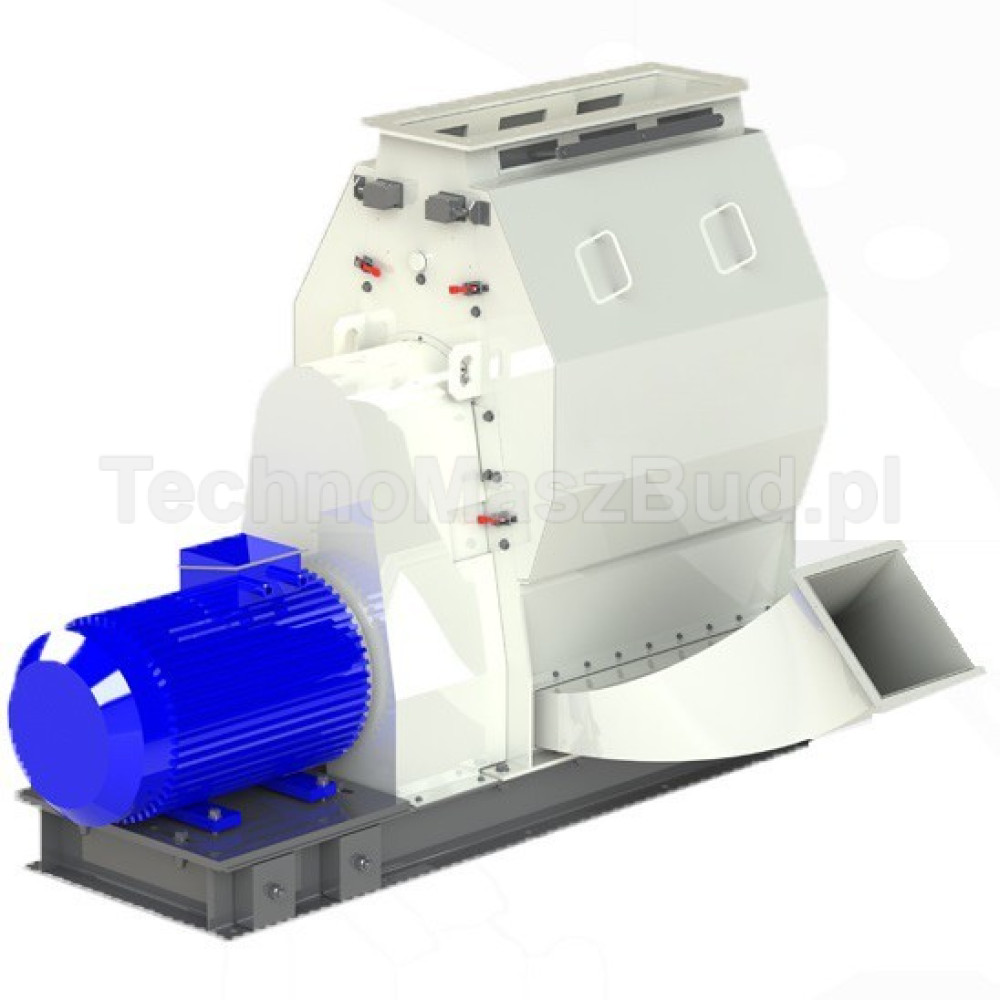
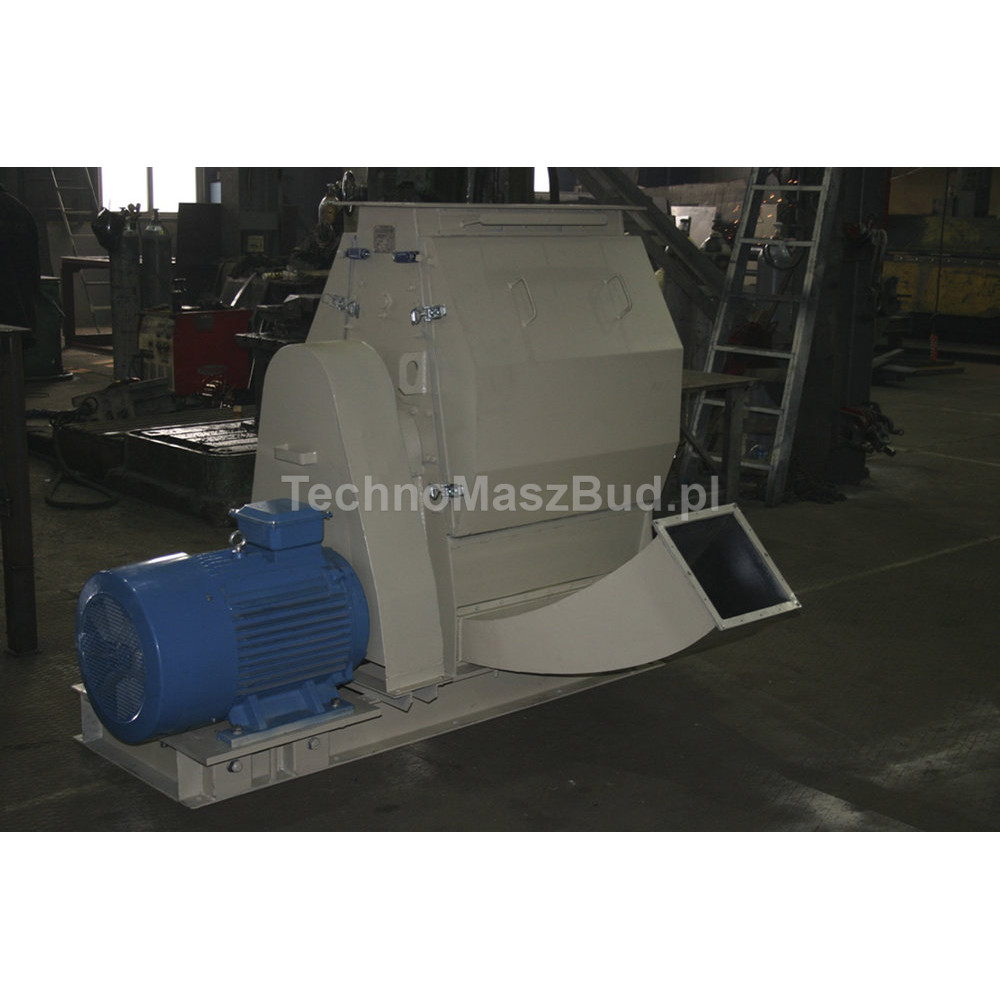
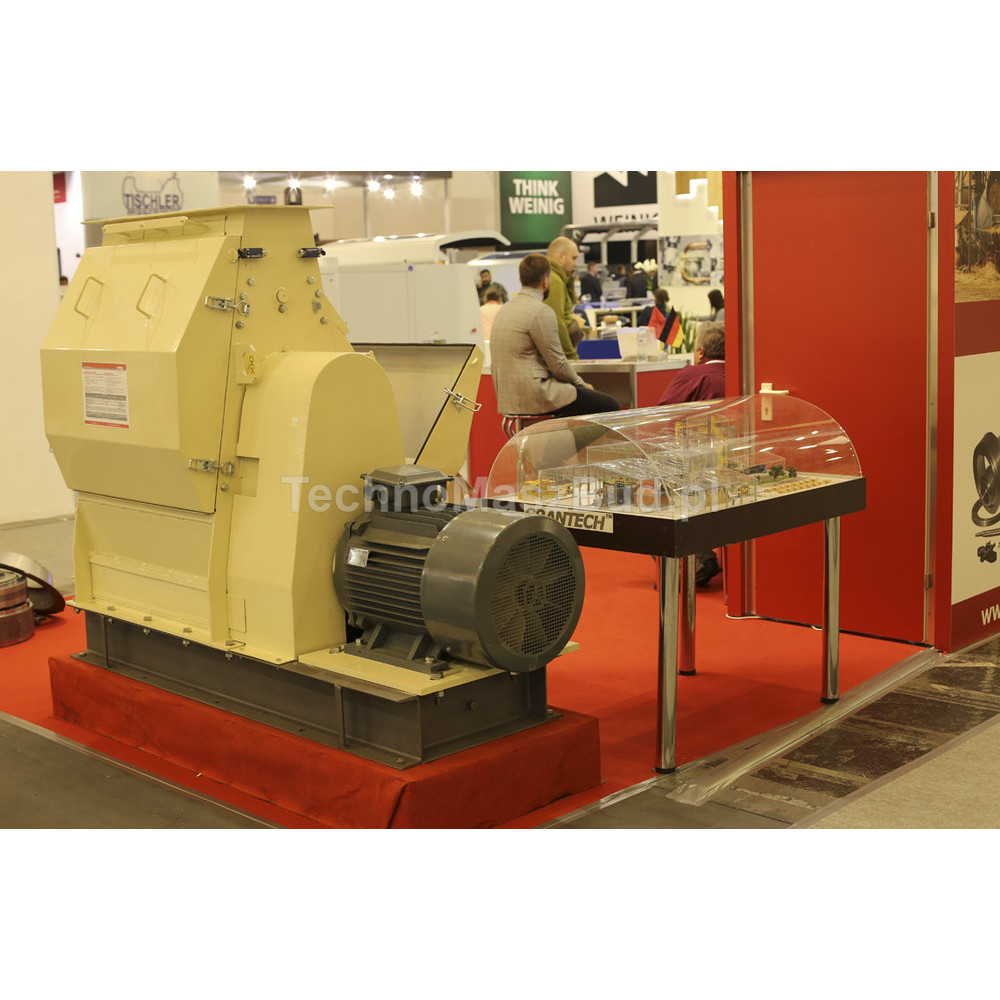
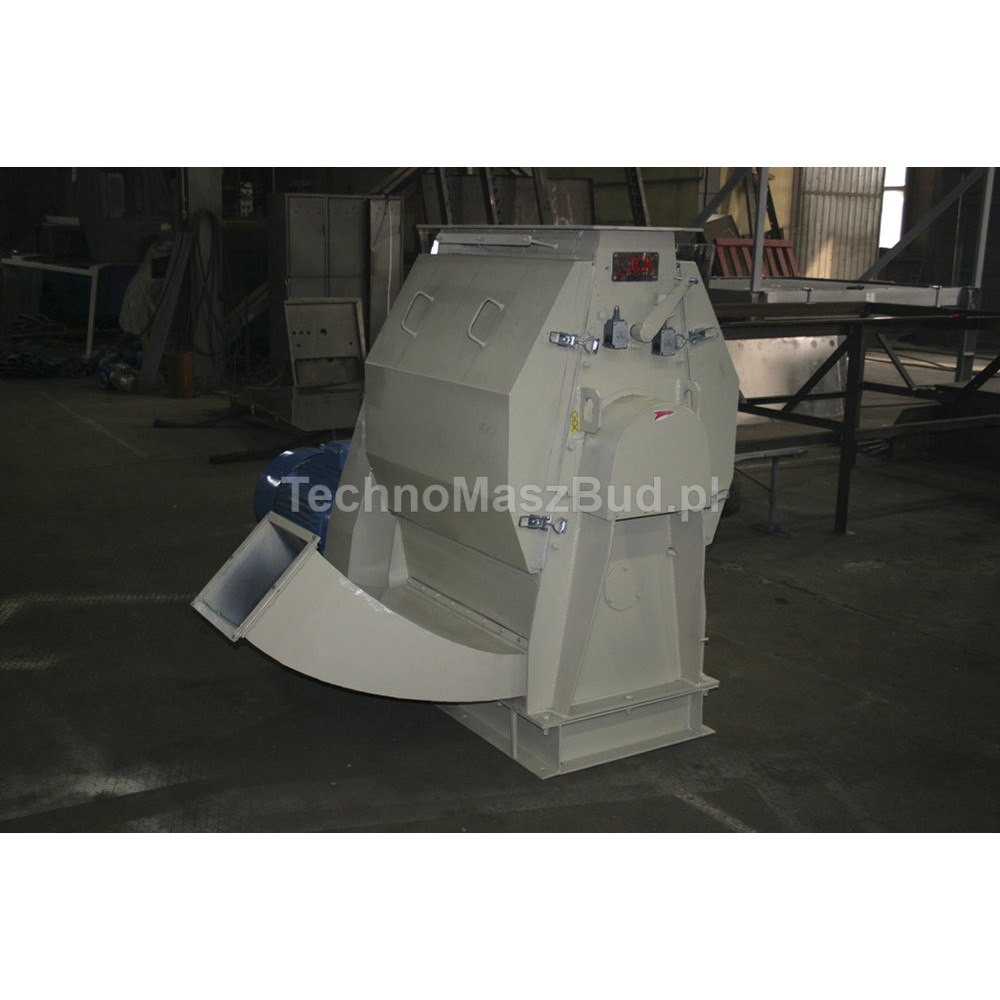
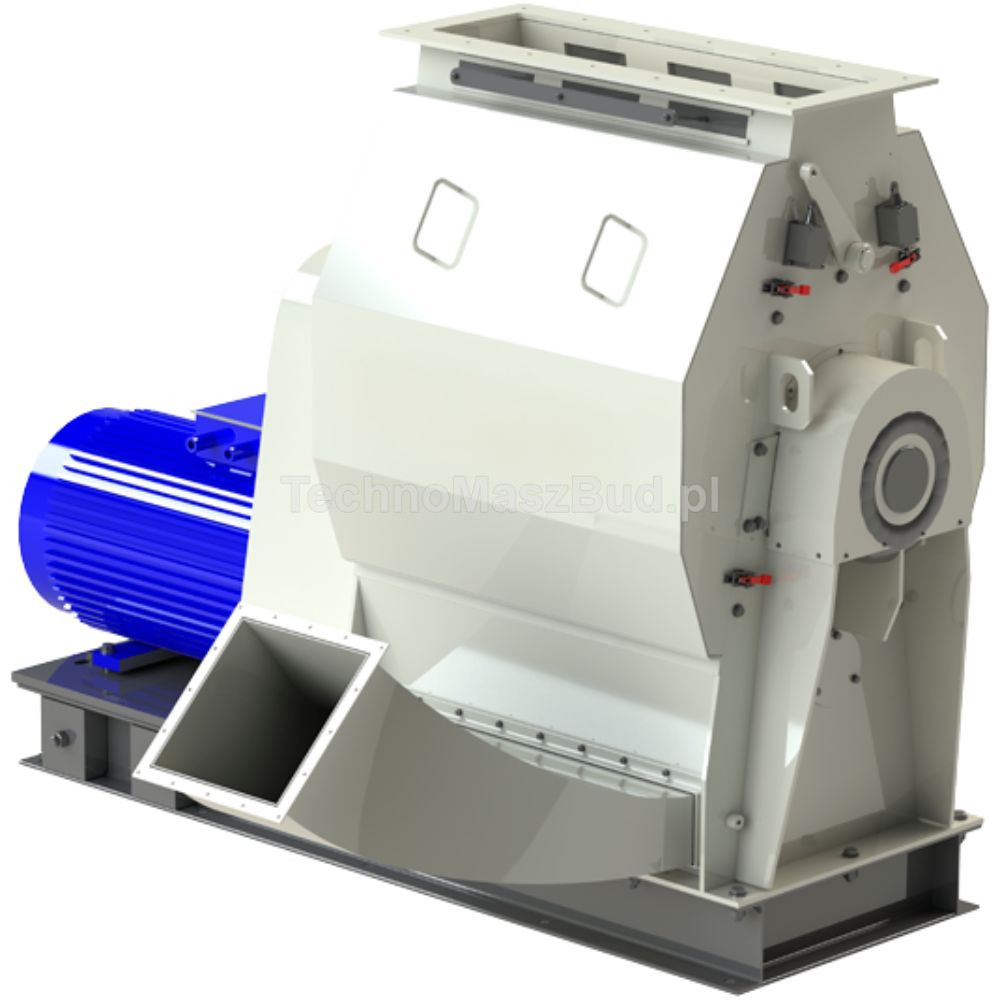
Hammer mill GTDRM
- Product Code: GTDRM
Description
The GTDRM hammer mill is a high-performance machine designed for fine grinding of biomass, lightweight materials, and feed mixtures. Thanks to its robust construction and high operational efficiency, it is widely used in pellet production plants, feed mills, farms, and companies processing plant-based raw materials.
The machine produces a uniform particle size, which is essential for subsequent technological processes such as pelletizing, mixing, and feed production.
Applications of the GTDRM Hammer Mill
The GTDRM hammer mill is designed for fine grinding of lightweight organic materials and feed components used in the production of pellets, biomass, and animal feed.
The machine can process, among others, the following raw materials:
- straw and hay after preliminary shredding;
- material from the GTIS straw shredder;
- wood chips, shavings, and sawdust after preliminary wood shredding;
- sunflower husks;
- rice husks;
- millet husks;
- feed mixture components;
- other lightweight plant-based materials.
Thanks to its versatile design, the mill is suitable both for pellet and biomass production lines as well as for animal feed manufacturing plants.
Raw Material Requirements
- maximum input material size: up to 50 mm;
- maximum raw material moisture content: up to 14%.
These parameters ensure high process efficiency and optimal quality of the ground material.
Main Advantages of the GTDRM Hammer Mill
- high productivity with relatively low energy consumption;
- can be adapted to different types of materials;
- large screen area and spacious feed chamber;
- compact and simple design;
- low operating costs;
- quick replacement of screens and hammers;
- carefully balanced rotor for extended machine life;
- reversible rotor rotation direction;
- high reliability and operational safety;
- long service life of working components.
Technical Specifications of the GTDRM Hammer Mill
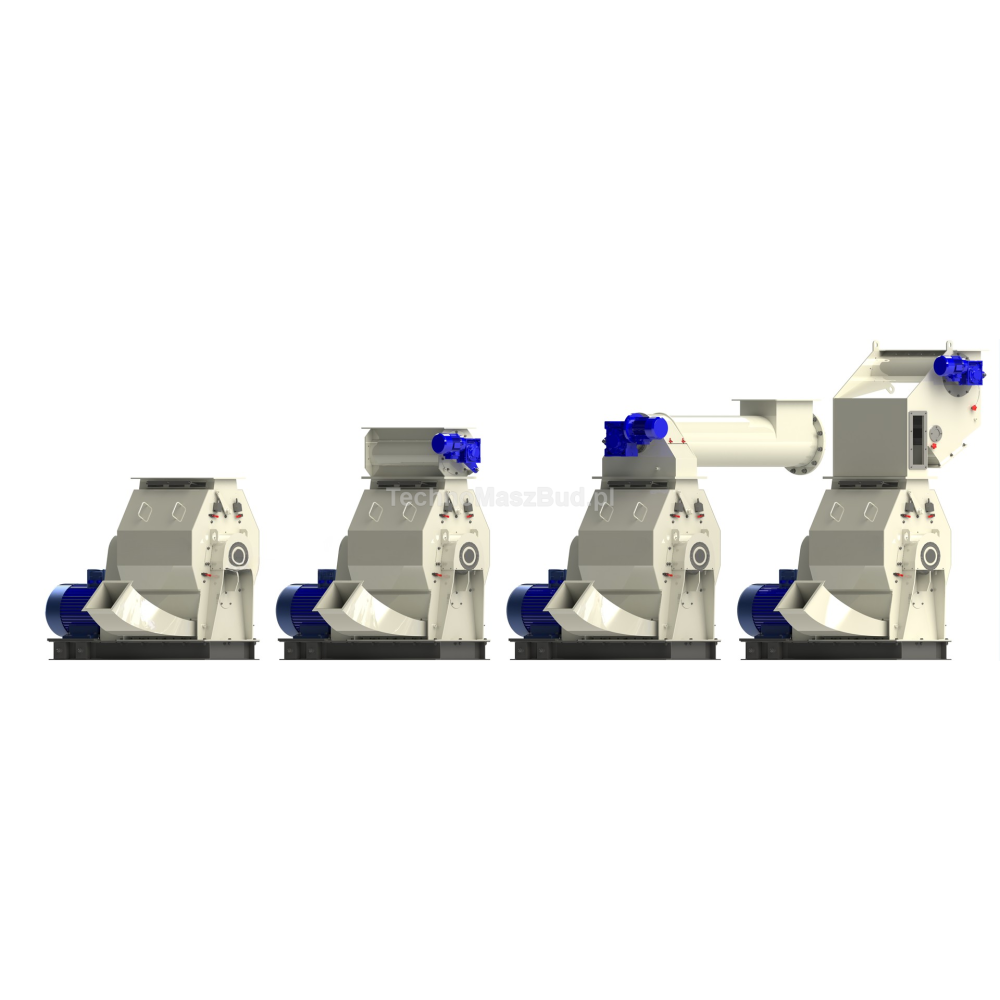
| Model | GTDRM-0.7/55 | GTDRM-0.7/55-1 | GTDRM-0.7/55-2 | GTDRM-0.7/55-3 |
|---|---|---|---|---|
| Feeder type | - | GTD-1 (airlock) | GTD-2 (screw) | GTD-3 (universal) |
| Weight, max., kg | 1600 | 1900 | 2200 | 2200 |
| Overall dimensions (W × L × H), mm | 2100 x 1500 x 1550 | 2100 x 1500 x 1950 | 2100 x 2980 x 2220 | 2100 x 1950 x 2600 |
| Hammer tip speed, m/s | 80 | 80 | 80 | 80 |
| Rotor diameter, mm | 700 | 700 | 700 | 700 |
| Rotor speed, rpm | 1800 | 1800 | 1800 | 1800 |
| Capacity*, t/h | up to 3 | up to 3 | up to 3 | up to 3 |
| Total installed power, max., kW | 55 | 57.2 | 57.2 | 57.2 |
* Machine capacity depends on the type of raw material, its physical properties, and the required final particle size.
** The manufacturer reserves the right to introduce design and technical modifications without prior notice.
Adjustable Ground Material Particle Size
The size of the final particle fraction depends on the diameter of the screen openings and the properties of the processed material. Standard particle sizes range from 3 to 6 mm.
The larger the screen openings and the lower the moisture content of the raw material, the higher the grinding capacity. The screen opening size is individually selected according to the customer's technological requirements.
Reliable Solution for the Feed and Biomass Industry
The GTDRM hammer mill is a versatile machine designed for efficient preparation of raw materials for further processing. Thanks to its high productivity, ease of operation, and adjustable operating parameters, it is suitable both for feed production and for pellet and biomass production lines.
The hammer mill is used to grind raw materials before pelletizing, briquetting, or further processing. The machine can process wood chips, sawdust, straw, hay, husks, and other types of biomass.
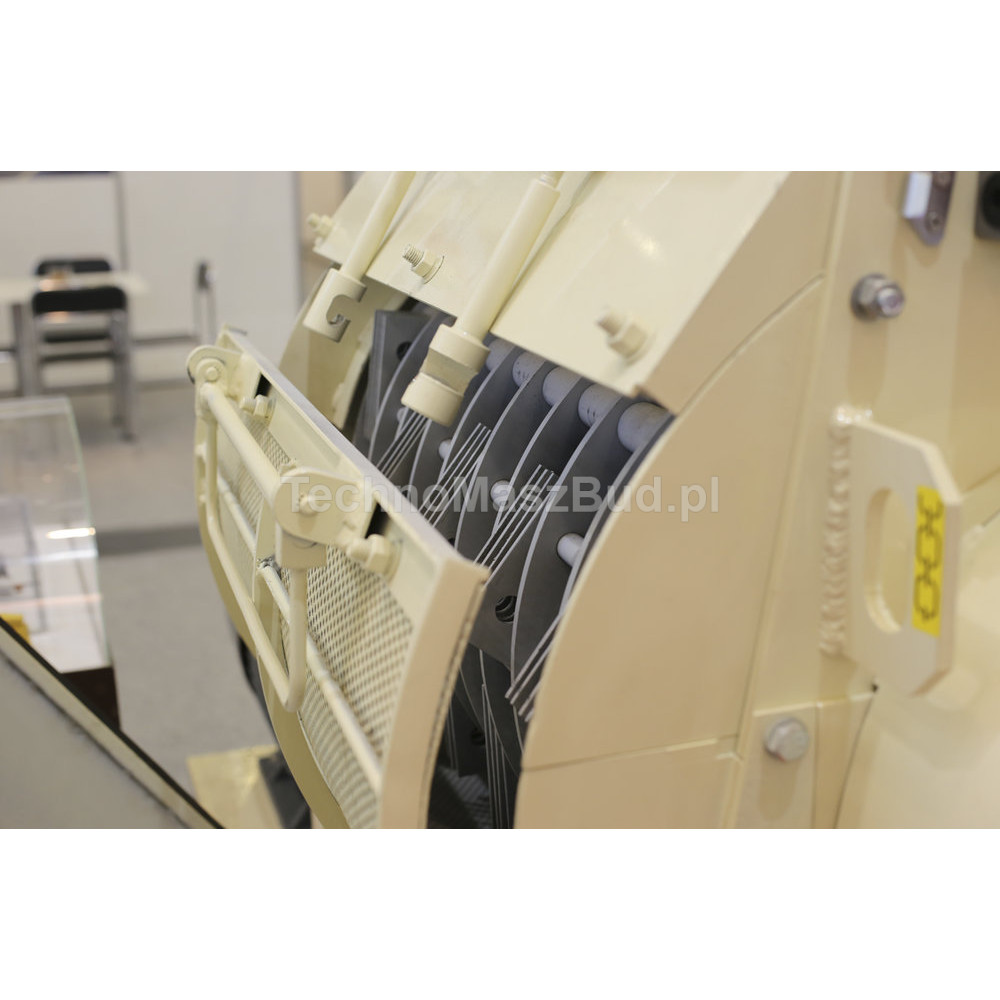
The main working component is a rotor equipped with hammers. Rotating at high speed, the hammers crush the supplied material by repeated impacts. The screen retains larger particles inside the grinding chamber until the required particle size is achieved.
How Does a Hammer Mill Work?
Raw material is fed through the inlet into the grinding chamber. A rotor driven by an electric motor sets the hammers in motion. The material is reduced in size by repeated impacts and contact with the internal components of the chamber.
Once the required particle size has been reached, the material passes through the screen openings. The finished product can be collected in a hopper, transported by a conveyor, or fed directly to the next machine in the production line.
The final particle size mainly depends on:
- the diameter of the screen openings;
- the type and hardness of the raw material;
- the moisture content of the material;
- the rotor speed;
- the feeding method and its consistency.
Hammer Mill Design
The simple design makes operation, maintenance, and replacement of wear parts easy. The main components of the machine include:
- steel frame and housing;
- rotor with hammers;
- replaceable screen;
- grinding chamber;
- electric motor;
- feed inlet;
- ground material discharge system;
- replaceable wear liners protecting the interior of the grinding chamber.
The use of wear-resistant components extends the machine's service life and reduces maintenance downtime.
Types of Hammer Mills
Hammer mills differ in design, power, capacity, and intended application. Available versions include single-rotor and double-rotor machines, models with vertical or horizontal shaft arrangements, and versions with reversible rotor rotation.
Single-rotor hammer mills are the most common solution. Their simple design makes them suitable for both small farms and industrial facilities. More demanding applications may require double-rotor mills providing single- or two-stage grinding.
Reversible hammer mills allow the rotor rotation direction to be changed, ensuring more even hammer wear and extending the service life of the working components.
How to Choose a Hammer Mill?
Before purchasing a hammer mill, it is necessary to determine the characteristics of the input material, the required capacity, and the desired final particle size. The moisture content of the raw material, feeding method, and compatibility with the rest of the production line should also be considered.
A hammer mill can be used to process:
- wood chips and wood waste;
- sawdust;
- straw and hay;
- grain and seed husks;
- agricultural and food-processing residues;
- properly prepared dry biomass.
In pellet production lines, the hammer mill is responsible for producing a uniform particle size. Properly ground material is easier to dose, mix, and pelletize, helping achieve stable production efficiency and consistent product quality.
Advantages of Hammer Mills
- high grinding efficiency;
- simple and durable construction;
- ability to process a wide variety of raw materials;
- adjustable particle size using interchangeable screens;
- easy replacement of hammers and other wear parts;
- simple maintenance;
- can operate as part of a complete production line;
- excellent balance between productivity and operating costs.
Purchasing a Hammer Mill
The hammer mill configuration should be selected according to the type of raw material and production conditions. When preparing an offer, we take into account the required power, capacity, particle size, and the feeding and discharge system.
To select the most suitable machine, information about the raw material type, moisture content, initial dimensions, and required capacity should be provided. Based on this information, the appropriate model, screen, and optional equipment can be selected.
Do you need more information about this device?
Contact us – we will advise you on the best solution!
Contact us