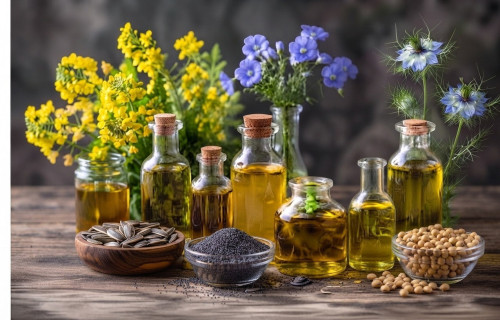
In Poland, the cultivation of oilseed crops is flourishing! And quite literally: rapeseed fields stretch for kilometers, and sunflower and soybean are also gaining popularity. But the choice of raw materials for oil production is much greater. Currently, cold-pressed oils from traditional cultivated plants, such as flax, poppy, or hemp, are becoming increasingly popular.
Cold-pressed oils from your own crops are an excellent business idea! In this way, the trend for ecology and healthy food, which has firmly taken root in Poland and Europe, can be turned into gold. What is more, this approach makes it possible to avoid diluting profits: thanks to skipping intermediaries and selling the raw material, the entire margin remains in the farmer’s pocket. The difference can be colossal: the price of oil is at least several times higher than the value of the raw material from which it was pressed. The price markup is particularly high in the case of unrefined cold-pressed oils, valued by consumers for their special health and taste qualities.
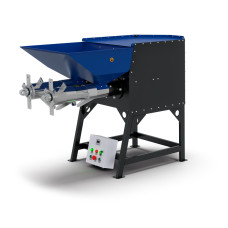
The type of raw material from which they were obtained and the pressing technology affect the taste, smell, appearance, and nutritional properties of vegetable oils. In terms of health-promoting properties and the distinctiveness of taste, aroma, and color, unrivaled are unrefined cold-pressed oils produced using screw presses. Compared to hot-pressed oils, they are definitely richer in polyunsaturated fatty acids, vitamins, phytosterols, and other compounds sensitive to thermal processing.
The golden trio of oilseed crops – rapeseed, sunflower, and soybean
Rapeseed, sunflower, and soybean are the three most popular oilseed crops grown in Poland. Their seeds are used to produce the most popular culinary oils, also used for the production of biofuels. Nothing has to go to waste! Post-extraction meal, that is, oil cake remaining after oil pressing, is a valuable, high-protein feed for livestock.
- Rapeseed – the cultivation area of this plant in Poland exceeds one million hectares! Rapeseed seeds contain approx. 45% fat, and their yield per hectare reaches 3-3.5 tons. Rapeseed oil is the basic vegetable oil in Poland and most European countries. It is used for frying, baking, and margarine production, and is also used in industry for the production of linseed oil varnish and biodiesel.
It is usually refined, which increases its durability and softens its taste, but significantly worsens its nutritional value. Meanwhile, natural cold-pressed rapeseed oil not only abounds in unsaturated fatty acids, but also contains them in the ideal proportions recommended by dietitians (that is, twice as many Omega-6 acids as Omega-3). It is also a rich source of vitamin E and plant sterols. For the production of rapeseed oil, the WT-200 industrial screw press is recommended.
- Sunflower – sunflower seeds are just as rich in fat as rapeseed seeds. Cold-pressed sunflower oil provides significant amounts of omega-6 unsaturated fatty acids, lecithin, vitamin E, iron, and copper. It also contains plant polyphenol compounds with strong antibacterial and anti-inflammatory effects. Its consumption lowers the level of so-called bad cholesterol (LDL), supports immunity, and protects against free radicals. It is an ideal addition to salads, raw vegetable salads, bread, and cold sauces. After refining, it can be used for frying at high temperatures, but it loses its health-promoting qualities. For pressing sunflower oil, the LPO-150 mini line is perfectly suitable, enabling comprehensive preparation of the raw material from seed calibration and cleaning, through dehulling and transport, to the cold-pressing process in the oil press.
- Soybean - it is classified as a legume, so its seeds abound in protein. Thanks to this, the oil cakes left after pressing oil from its seeds are like a protein shake for animals! Soybean seeds also contain approx. 20% fat. Cold-pressed soybean oil is an indispensable ingredient of Oriental cuisine. It is a rich source of omega-6 and Omega-3 unsaturated fatty acids, zinc, vitamin K, and lecithin. Its consumption supports memory and proper liver function. Sunflower oil is used in cosmetics, in industry it is used in the production of paints and varnishes, and also as a biofuel. For efficient soybean extrusion and pressing of high-quality soybean oil, the SojaPress – 300 line and SojaPress-300 Mini are dedicated, enabling the processing of up to 300 kg of raw material per hour.
From the field to the oil press
The role of a raw material for oil production is often the second, less obvious use of many otherwise well-known cultivated plants. Cold-pressed oils produced on a smaller scale, from niche raw materials, reach prices ranging from several dozen to over one hundred PLN per liter!
- Flax – blue fields produce brown seeds, i.e. flaxseed, containing approx. 40% fat. Flaxseed oil has an intense smell and an astringent taste. It is a treasure trove of Omega-3 acids. It is used by pharmacists for the production of prescription medicines and galenical preparations. Artists use it to protect the surfaces of paintings and sculptures.
- Opium poppy – poppy seed oil consists of as much as 70% Omega 6 acids. It provides vitamins A, D, E, and B vitamins, as well as phytosterols, calcium, magnesium, potassium, and iron. Its delicately nutty taste and characteristic “poppy” aroma suit salads and desserts. It is used in the production of organic cosmetics nourishing the skin, hair, and nails.
- Black cumin – oil from black cumin seeds has an intense, spicy smell and a taste with a subtle note of bitterness. It contains thymoquinone, a strong antioxidant with anticancer, anti-inflammatory, and anti-allergic properties.
- Industrial hemp – hemp oil, cold-pressed from industrial hemp seeds, can be recognized by its green-brown color and spicy-nutty smell. Added to dishes, it supports immunity and heart function. Applied externally, it perfectly moisturizes the skin and has an anti-inflammatory effect. Attention: after opening, it can be stored for a maximum of one month, even in the refrigerator.
- Maize – although it is associated mainly as a raw material for the production of feed and maize flour, it is a valuable oilseed crop. Cold-pressed maize oil from corn germs is easily digestible, rich in Omega 6 acids, vitamin E, and phytosterols. It is widely used in the food and cosmetics industries. It is also recommended as a feed additive for horses struggling with ulcers.
To meet the tastes of demanding customers, it is worth diversifying crops and the assortment of oils produced from them. In such a situation, the ideal solution will be the UM-200 universal oil press, which is able to squeeze healthy vegetable fats from all seeds and nuts rich in fats, even raw materials resistant to pressing using “ordinary” presses!