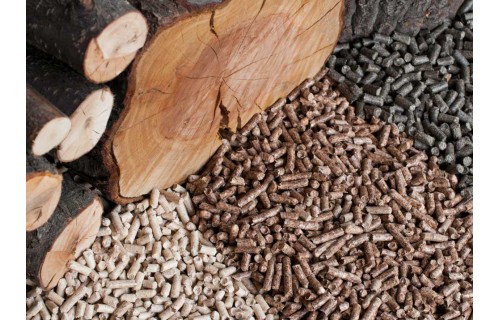
Crisis in the Pellet Market: Why Are Prices So High and How to Ensure Energy Independence?
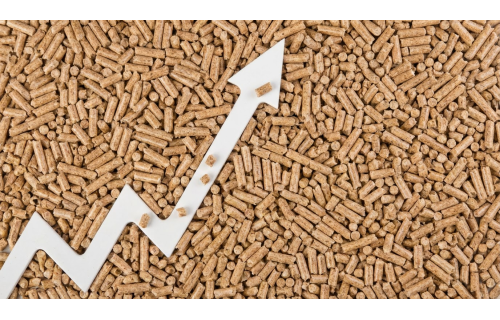
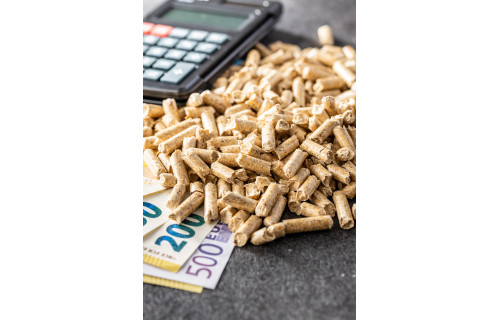
In recent heating seasons, homeowners and businesses using biomass boilers have experienced a real rollercoaster. Pellet, which for years was promoted as a cheap, ecological and price-stable alternative to coal or gas, has become a scarce commodity, and its prices have reached previously unseen levels.
Although the market shows periodic fluctuations, the question: ”Is it worth heating with pellets?” remains open. The profitability of pellet heating has unfortunately declined significantly recently due to rising prices. Why is this fuel so expensive and is there a way to become resistant to market turbulence?
What causes the shortage and high price of pellets?
The current situation is not the result of a single factor, but a combination of macroeconomic and geopolitical phenomena. Analyzing industry reports and market data (including analyses by UOKiK and energy portals), three main pillars of the problem can be identified:
- Limited availability of raw material: The wood industry is struggling with lower wood supply from the State Forests, which directly translates into a smaller amount of sawdust – the main component of high-quality pellets.
- Energy and logistics costs: Pellet production is an energy-intensive process. Drying the raw material and operating the granulator require large amounts of electricity, the prices of which have risen drastically in recent years. In addition, transport costs are increasing.
- Export and external demand: Poland is one of the key pellet producers in Europe. A large part of domestic production goes to Western markets (Germany, Italy, Denmark), where buyers are able to pay higher rates, which automatically drives up prices on the domestic market.
- “Downturn” in the furniture industry: a natural source of sawdust and wood chips for pellet production is the furniture industry. In the last year it has experienced a noticeable crisis. Lower furniture production translates into a smaller amount of wood-based waste - there is less material for pellet pressing, and pellets become more expensive.
- Success of the “Clean Air” program: government incentives to switch to ecological home heating methods have increased interest in biofuel. Demand has exceeded supply, which has affected pellet prices.
- Professional entities: Recently, more and more enterprises have decided to heat industrial facilities with pellets, which has clearly increased demand for this fuel. With limited raw material availability and the dominance of large buyers contracting wholesale quantities, this leads to price increases and their maintenance at an elevated level even outside the heating season.
Pellet production – what determines fuel quality?
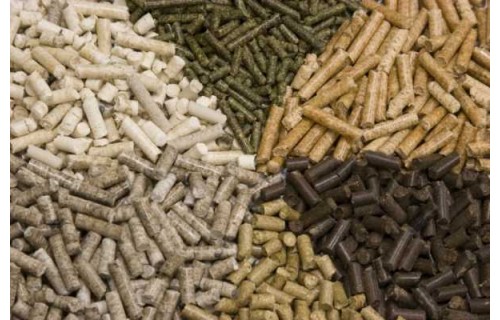
For the end user, not only price but also efficiency is crucial. Low quality cheap pellets (often imported from uncertain sources) lead to clinker formation, burner contamination and reduced heating efficiency.
In the face of market uncertainty, more and more entities – especially farms, carpentry workshops and sawmills – are beginning to see the potential in raw materials they have “at hand”. Wood waste, straw, and even agricultural production residues can become valuable fuel.
How to regain control over heating costs?
The high price of the finished product at fuel depots makes own pellet production a natural direction. This solution not only allows heating costs to be reduced almost to zero (if we have our own raw material), but also gives certainty regarding the composition and calorific value of the fuel.
Investment in modern pellet mills
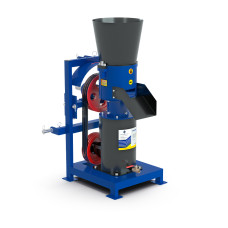
The key to success in this area is the appropriate technical facilities. A modern pellet mill (granulator) is the heart of the production process. Thanks to a precise die and roller system, these devices can process shredded biomass into compact, high-calorific granules.
When choosing equipment, it is worth paying attention to:
- Durability of components: Dies are subjected to enormous loads, therefore high-quality steel is essential.
- Versatility: The ability to pelletize not only sawdust, but also straw, hay or plastic waste.
- Operating costs: Ratio of energy consumption to efficiency (kg/h).
Professional pellet lines – a solution for demanding users
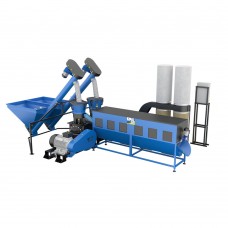
For enterprises generating large amounts of biomass waste, a single machine may be insufficient. In such cases, the optimal solution is complete pellet production lines. These systems automate the entire process – from raw material feeding, through moistening and granulation, to cooling and packaging of the finished product.
Automation allows for repeatable quality, which is crucial if we plan not only to meet our own needs but also to sell surplus fuel to local customers.
Self-produced pellets - an additional source of income for your farm
Machines for independent biomass fuel production are characterized by high efficiency - even the smallest models such as the GMK-150 can produce 50 kg of granulate per hour, and large lines such as LGD 3000 (KOBMI) PRO achieve results of 500 kg/h. As you can easily notice, the needs of your household, unless you live in Buckingham Palace, can be satisfied very quickly.
In such a situation, the surplus granulate produced from biomass may constitute an attractive source of income. In a situation of fuel shortage on the market, such a business may turn out to be a hit.
Pellet production - is it profitable?
Economic analysis shows that at current market pellet prices (often exceeding PLN 2000 per ton during peak periods), the return on investment in a pellet production line is record fast. Using your own production waste, the cost of producing a ton of fuel is limited mainly to electricity costs and machine maintenance.
Summary: The future belongs to biomass
The solid fuel market will undergo further transformations. The departure from coal is inevitable, which means that demand for pellets will grow. However, energy stability will be gained not by those who look for the cheapest offers at depots, but by those who choose their own technological solutions.
If you have raw material and want to become independent from external suppliers, it is worth getting acquainted with the possibilities offered by advanced pellet mills and complete production lines. High quality machinery is the only guarantee that the produced fuel will meet the stringent standards of modern boilers.