Raw materials for granulation / pelletizing. Types and characteristics
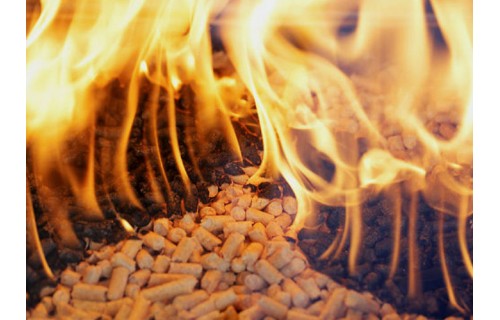
Fuel pellets are solid-form biofuels that have now become an accessible and more environmentally friendly alternative to liquid and gaseous fuels. More and more companies, as well as homes private and municipal apartments, are switching to pellet heating, because it is a much cheaper fuel that does not require the installation of additional cleaning equipment. The growing demand for pellets has led to the expansion of the range of raw materials from which granules are produced. What raw materials do fuel pellet manufacturers use today besides wood sawdust?
At the beginning, it is worth noting that different raw materials are suitable for pelletizing / granulating, processing and drying in different ways, and also differ in combustion indicators. In the case of different raw materials, pellets on the same equipment may be less/more dense, characterized by high or low density, weight, color. Many manufacturers, in order to obtain high efficiency of the production line and better appearance of pellets may add various additives to the mixture as a binder.
In Europe, the following requirements are applied for the production of fuel pellets:
- particle size should be within: 3-6mm in length and 1-2mm in thickness;
- raw material moisture should be 8-18% (requirements concerning pellets used in production);
- ash content of fuel pellets after combustion should be from 1 to 3% for each class.
In case of deviations from the size requirements, industrial shredders are used, and to regulate moisture – dryers or humidifiers. Standardization has also introduced a requirement regarding the composition of pellets, in which chemicals should not be present.
What raw materials can be used to obtain fuel pellets?
As already mentioned, the range of raw materials for pellet production is expanding. Currently, manufacturers produce fuel pellets not only from wood sawdust.
The following raw materials for fuel pellets are available:
- wood chips obtained through wood processing;
- by-products (slabs, strips) during wood processing;
- technological chips;
- low-quality wood products.
Wood chips
Sawdust is considered the highest quality and cleanest raw material for the production of fuel granules, as it does not contain bark particles and other impurities that give a high ash content during combustion. If necessary, sawdust or chips are dried or moistened.
By-products
By-products occur in different groups. The first group includes slabs, ends, offcuts. The second includes scraps and trimmings. This type of raw material is suitable for pellet production only after being crushed into chips.
Chips
Small chips are also an excellent raw material for the production of fuel pellets. To prepare such raw material, special shredders / chippers with screens are needed to obtain the desired particle size. The best option for production will be chips cleaned of bark and foreign impurities.
Low-quality wood products
Low-quality wood products can become good raw material for pellet production provided that they have not been treated with varnish and other chemicals. They should also be recycled into chips before pressing the granules.
How different wood species affect the quality of pellets
Different wood species affect the characteristics of pellets, their combustion, heat dissipation, etc. To make pellets more durable, softwood is used as raw material due to the high lignin content – a natural binder present in all coniferous trees. In addition, softwood raw materials are better suited for pressing, which reduces the load on the equipment and its rapid wear. For these two reasons, manufacturers often choose sawdust and chips from softwood. However, softwood pellets release less heat during combustion than hardwood. In addition, they are lighter.
Pellet manufacturers have found an ideal option – mixing sawdust from coniferous and deciduous trees. Such mixing provides many benefits:
- reduces the cost of the final product;
- does not affect quality if appropriate proportions are observed;
- makes pellets suitable for heating homes that fall into classes A1, A2.
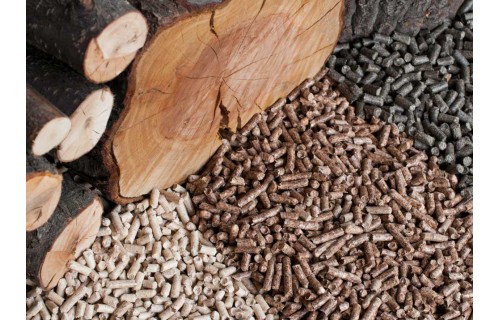
Many consumers are convinced that only light-colored pellets indicate high quality. It is believed, that only the admixture of bark can give a dark shade. However, in practice, sawdust from dark wood species can be used in production, which affects color but does not affect quality.
What raw materials besides wood can be used for granulation
In order to protect forest resources, other alternative sources of raw materials for pellet production have been discovered. These include:
- post-harvest field waste: straw, seed husks, peeled corn cobs;
- charcoal;
- reed;
- peat;
- bird droppings;
- waste paper.
Of course, in alternative fuels the ash indicators are much higher. Some chemical compounds are also a disadvantage. However, in the first case, the ash after combustion of the listed types of raw materials is used by farmers as an excellent fertilizer. It has been proven that the resulting ash perfectly replenishes the mineral resources of the soil and promotes increased plant growth.
Peat pellets are more suitable for industrial complexes; however, they have already gained recognition in Poland. Their production and distribution are growing year by year. Before pellet production, the peat mass is dried.
Pellets from chicken droppings have great value for farmers and agronomists. This type of pellet is not very popular as fuel, but is widely used as fertilizer. There are many advantages: after preliminary heat treatment, all pathogenic microflora in the droppings is destroyed. As a result, an ideal fertilizer for fields and gardens is obtained. An interesting fact is that granules from bird droppings have a higher energy value than wood. The market price is accordingly higher.
Fuel pellets from waste paper have high energy value. The advantage is the low cost and availability of raw materials.
Pellet production has proven to be beneficial for the environment and its natural resources: waste from the wood industry, agro-industrial, agricultural and other fields are used as raw materials. In this way, we obtain replenishable supplies of fuel and waste