Most common mistakes when working with a pellet mill and granulator – how to avoid them?

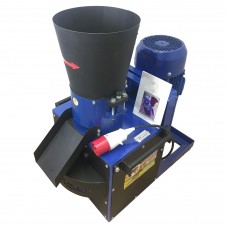
We decided to collect and explain the most frequently asked questions from users regarding working with a pellet mill, while also pointing out potential errors that may occur.
Here are the most common causes of problems:
- Inappropriate moisture content of raw material for pellet production (too high or too low)
- Pellet mill die incorrectly selected for the type of processed raw material
- Incorrect adjustment of the gap between the die and the rollers
- Pellet mill with insufficient power
- Improper raw material fraction
- Neglecting pellet mill maintenance
- Voltage fluctuations
- Solid particles entering the working section
Inappropriate moisture content of raw material for pellet production
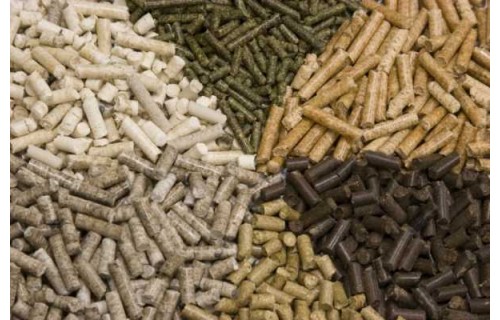
One of the most common user questions is “Why do pellets crumble in your hands?”. The answer is simple: the key parameter is the moisture content of the raw material. For pellet production, the optimal moisture level is 12-14%, while for feed – 17-18%.
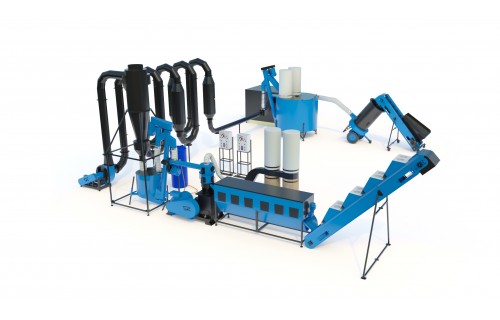
Specialized moisture meters are used to precisely determine the moisture content of raw material. When purchasing raw materials from a supplier, it is worth verifying the declared parameters. If necessary, a dryer or humidifier may be useful to achieve optimal moisture.
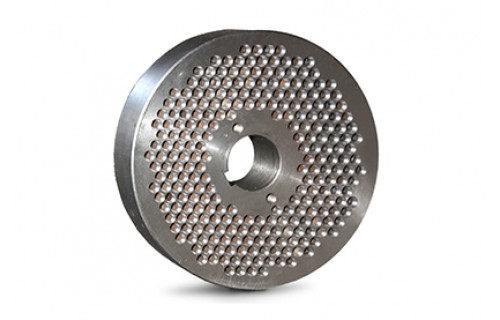
Pellet mill die incorrectly selected for the type of processed raw material
Each type of raw material requires appropriate pressure during the pelleting process. To obtain durable, high-quality granulate that will not crumble, proper die selection is essential.
When selecting a die, the following parameters should be considered:
- Diameter of the die holes
- Angle of the die holes
- Die thickness
When purchasing a pellet mill, it is worth consulting the manufacturer, who will help select the appropriate die for the specifics of the processed raw material.
Incorrect adjustment of the gap between the die and the rollers
Correct adjustment of the gap between the die and the rollers directly affects:
- Granulator performance
- Energy consumption
- Service life of the die and rollers
The recommended average gap is from 0.05 to 0.3 mm.
Pellet mill or granulator with insufficient power
When choosing a granulator, the key issue is the motor power, which directly affects the device's performance. For feed granulation, lower-power models may be sufficient. However, in the case of pelleting sawdust, especially with low lignin content, it is necessary to choose more powerful machines.
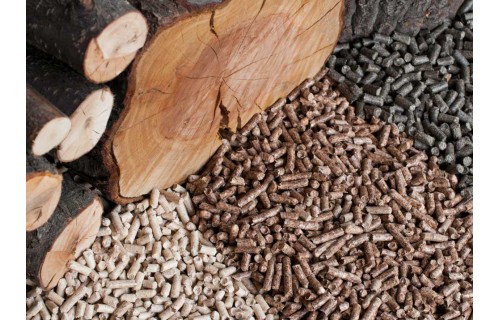
If you choose a low-power pellet mill and want to produce pellets from hard wood species such as oak, linden, birch, alder, this will cause excessive load on the working units and, consequently – faster wear or damage to the pellet mill. You should also not attempt to granulate raw material that is not intended for a given type of machine.
Improper raw material fraction
For the granulation process to run smoothly, it is necessary to pre-prepare raw material of the appropriate fraction. Compact and affordable granulator models usually do not have built-in shredders.
Feeding raw materials with varying fractions into the pellet mill may lead to device failure. There are two solutions to this problem: grinding raw materials on a separate machine or ensuring constant supply of raw materials with the desired fraction.
The optimal particle size of the raw material should be 1-2 mm smaller than the diameter of the holes in the die.
Neglecting pellet mill maintenance
A common operational mistake is the lack of regular maintenance of pellet mill components. Rollers and bearings are constantly exposed to adverse factors such as:
- High temperatures
- Heavy loads
- Moisture
- Dust
Therefore, it is recommended to lubricate the rollers every 2-3 hours of pellet mill operation.
Voltage fluctuations
Even normal voltage fluctuations in the electrical network can negatively affect pellet mill operation and lead to failure. Stable power supply should be ensured and protection against voltage spikes should be used, employing specialized devices for this purpose.
Solid particles entering the working section
Another mistake is insufficient control of raw material by the operator before loading it into the pellet mill. Solid particles, hard pieces of wood and other unwanted objects that may be present in the storage area can enter the material. To prevent this, raw material should always be carefully checked before use.
Following these simple rules will significantly extend the service life of the pellet mill and allow you to obtain a high-quality finished product.
We hope this information proves helpful and helps avoid mistakes when working with a pellet mill. If you have questions regarding the replacement of consumables or ordering lubricants, we encourage you to contact our specialists.