Full wood processing cycle for pellet production
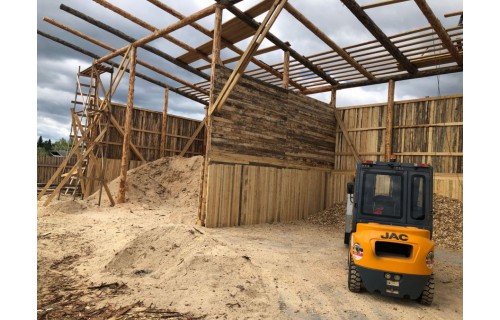
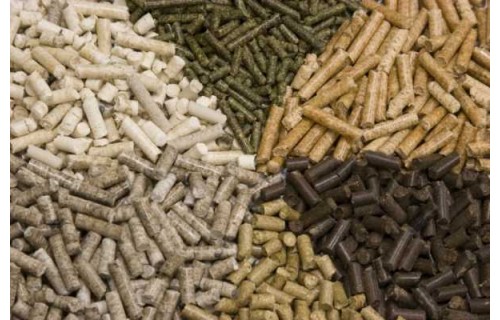
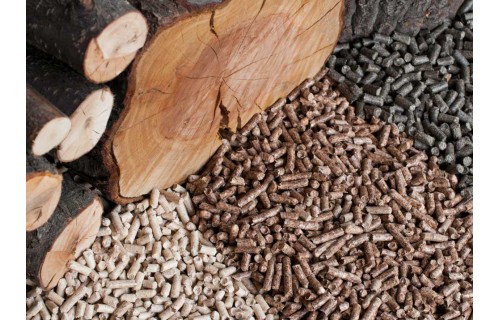
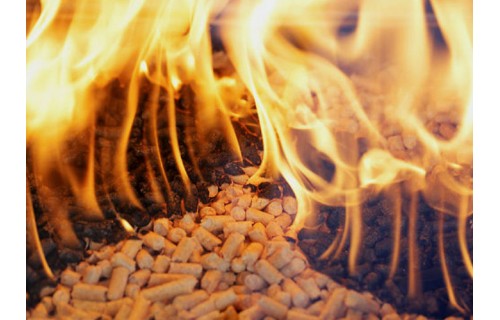
Currently, many specialists are dealing with environmental issues. The Polish market has also begun introducing equipment for the production of solid eco-friendly fuel, which is safer than other types of fuel. In addition, it was decided to process wood waste. Companies involved in the wood industry can now generate additional income by implementing equipment for the production of wood pellets.
The wood processing cycle is divided into the following stages:
• shredding branches into wood chips;
• recycling, crushing of chips;
• drying raw materials to improve combustion quality and heat dissipation;
• processing raw materials into pellets;
• transport and packaging.
Our company supplies equipment for every stage of wood processing. We can install wood pellet production equipment at your facility. However, each piece of equipment should be discussed separately.
Shredding branches into wood chips
Let us imagine that after the wood processing process there are tree branches, bark, slats, slabs etc. In order to obtain high-quality chips, they should be ground. Wood shredder / ZUBR chipper is capable of grinding wood waste into high-quality chips sized from 5 to 50 mm in a short time. The machine is supplied in two versions: with an electric motor and powered by a tractor PTO. This makes it possible to choose the most suitable device for your conditions and process branches at their storage site.
Crushing wood chips
After obtaining chips from branches, they should be processed into the appropriate fraction to obtain high-quality pellets. According to this technological stage, the next step will be further processing of chips into a smaller fraction. Hammer mill MB-500 not only processes chips, but also perfectly handles grain, husks, shavings. The fraction can be adjusted, and we have also provided the possibility of quick replacement of screens and hammers. To eliminate excess dust, a Cyclone extraction system can be connected to the hammer crusher. Dust from shavings can be used in secondary production. The equipment capacity is about 600 kg/h when grinding shavings and about 8 t/h when grinding grain.
Drying raw materials
As practice shows, primary raw materials have a high moisture level, about 50-60%. To obtain high-quality pellets with a high combustion coefficient and heat dissipation, the moisture level should not exceed 8-12%. The moisture degree can be checked using a moisture meter, and the aerodynamic dryer SA-600 will help achieve the appropriate moisture level.
The device consists of a pipe through which a hot air stream with a temperature of 120-150 °C flows. Moisture located on the surface evaporates, and that from the inside moves to the surface. The dryer is powered by a solid fuel boiler and features a compact design.
Processing raw materials into pellets
After drying the raw materials, it is necessary to produce fuel granulate. If you have decided to produce pellets for sale or export, one pelletizer may turn out to be insufficient, because there are many requirements and standards concerning pellet quality.
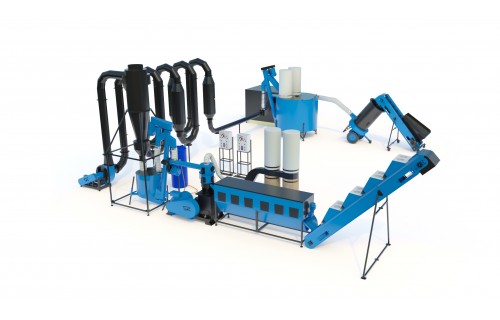
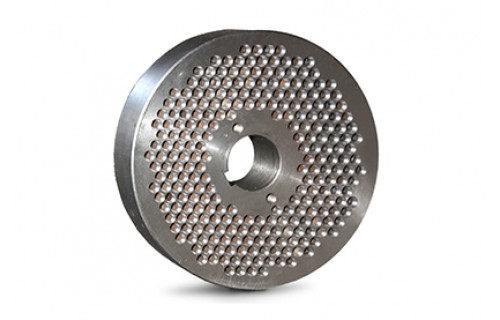
For the full pelleting process, our company offers the purchase of a mini pellet production line, which is compact, energy-efficient, easy to operate and maintain. The line consists of the following units: a hopper feeding raw materials, which ensures even feeding of sawdust into the pelletizer; a raw material humidification system, which doses the necessary amount of moisture for better granulation; a pelletizer with a capacity of up to 450 kg/h; a calibrator-cooler, which sorts the granulate by size and cools it to maintain integrity; an extraction system.
Transport and packaging of pellets
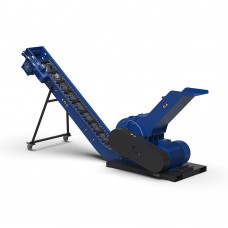
The final stage in the entire wood processing cycle is a belt conveyor, which allows for transporting and packaging finished products into big bags. Our company offers the PT-500 conveyor, which is characterized by high power and efficiency.
With this equipment, the entire wood processing cycle can be brought to maximum automation and generate additional profit from the sale of high-quality wood pellets.