Seed treatment – support at the start ensures healthy yields
The germination and emergence period is a critical stage, crucial for the success of the entire cultivation. During the earliest period of life, the plant is especially vulnerable to adverse environmental factors. In addition to abiotic stresses such as drought and low temperatures, the main threat comes from soil-borne pathogens. Fortunately, there is a simple way to provide protection against them. Seed treatment before sowing ensures a healthy start, which ultimately allows for harvesting higher yields of better quality.
How to treat seeds? Basic methods – comparison of vegetable seed calibration methods
Seed treatment is a general term for treatments protecting sowing material against pathogens and pests present in the soil, on the surface of seeds or inside them. It also applies to other plant parts intended for sowing or planting, e.g. bulbs, tubers and infructescences such as beet seed balls.
What is the difference between chemical and biological seed dressings? Comparison – which is better
Various seed treatment methods are known, however for many reasons the most widely used is treating sowing material with chemical seed dressings containing fungicides, insecticides or other plant protection products. There are seed dressings combining substances protecting against pathogenic fungi and pests, as well as enriched with fertilizers, biostimulants and growth regulators. Alongside traditional dressings acting on the grain surface, systemic seed dressings are increasingly used, which also combat pathogens present inside the seeds and additionally provide the plant with protection during the first several weeks after emergence. Available are also ecological seed dressings, based on mineral and plant substances as well as microbiological preparations, approved for use in organic farming.
Wet seed treatment
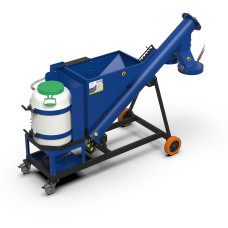
The most common and most accurate method is wet seed treatment, i.e. coating sowing material with a pesticide solution or suspension using a seed treater. Liquid dressing dosed using a professional seed treatment machine reaches every groove and indentation of the seed, creating a tight protective barrier. The treatment ensures precise and even coverage of every grain, and also allows economical and precise dosing of the preparation containing the active substance.
Using dry seed dressings does not guarantee accurate coverage of the grain with the protective preparation and is troublesome due to intensive dusting. Dust generated during the seed treatment and sowing process poses a direct threat to the operator’s health and to the natural environment, especially pollinating insects.
What are the physical methods of seed treatment? Chemical seed dressings vs. physical treatment
An alternative to seed dressings are physical methods, such as exposing sowing material to high temperature or UV radiation. Their use in agriculture is limited due to technical difficulties and lack of residual protection. They only combat pathogens present in or on the seeds at the time of treatment, but do not provide protection against pathogens or pests present in the soil.
Treating seeds with high temperature involves a significant risk of error: 2-3 °C above the recommended value may result in destruction of the sowing material, while too low a temperature will not neutralize pathogens. Moreover, the effect of physical methods is very short-lived, whereas chemically treated seeds can be stored for many months without losing protection. Physical treatment requires costly infrastructure, generates high energy consumption and labor costs. Meanwhile, professional seed treaters allow several tons of sowing material to be quickly and effortlessly coated within an hour, and their operation does not require specialized training.
Seed treatment provides a healthy start for plants
How does seed treatment work and what benefits does it bring?
The benefits of seed treatment before sowing are greater than they seem! The primary goal of this treatment is, of course, protecting sowing material against pathogens and pests. Numerous studies prove that the use of properly selected fungicidal seed dressings provides protection both against pathogenic agents present on the surface and inside the seeds, as well as those occurring in the soil and attacking germinating seeds and seedlings. Seed treatment protects plants during the crucial initial growth period (during the first 4–5 weeks after sowing). Moreover, systemic dressings at early stages of plant development protect above-ground parts against infection by airborne pathogens such as rusts (Puccinnia spp.) and septoria diseases (Septoria spp.).
Fungicidal seed dressings are of the greatest importance in agriculture. Damping-off disease caused by various pathogens classified as fungi and oomycetes (including Fusarium, Rhizoctonia, Pythium) is among the most serious threats to crops. It affects almost all plant species grown from seed, including agricultural, vegetable and ornamental crops. It causes seedlings to die before or shortly after emergence, resulting in empty spots in the field. The use of fungicidal dressings makes it possible to almost eliminate this problem! Meanwhile, in the case of untreated seeds germinating in damp, cool weather, damping-off may cause losses reaching even 80–90%! After all, plants that die at the initial growth stage will not produce yields.
Seed grain treatment also prevents the occurrence of many other seed-borne and soil-borne diseases. For example, the use of dressings containing azole fungicides shows nearly 100% effectiveness in controlling common bunt (Tilletia caries) and smut diseases (Ustilago spp.), dangerous diseases attacking cereals and maize.
Seed treatment pays off! Benefits for the environment and the wallet
Seed treatment causes a much lower burden on the natural environment compared to traditional foliar spraying. It is a basic treatment recommended in integrated plant protection and production. The use of seed dressings allows avoiding 1 or 2 foliar sprayings during the growing season, depending on the plant species, pathogen pressure and weather conditions. During fungicide spraying, from several dozen to even several hundred times more active substance per hectare is usually used than during seed treatment! This results from the fact that during spraying the substance is dispersed over the entire field surface, i.e. both onto plants and soil. Seed treatment is much more precise: in the case of liquid dressings applied using a seed treater, the preparation is dosed exclusively onto the grain surface, so the treatment does not generate active substance losses or pose a risk to the environment. The amount of active substance used is only a few grams per 100 kg of seeds!
Thanks to seed treatment, costs related to purchasing plant protection products and applying them in the form of spraying can be significantly reduced. An important benefit is also time saving and making plant protection during the initial period independent of weather conditions. Sowing treated seeds takes the same amount of time as untreated ones, while allowing omission of up to two time-consuming entries into the field with a sprayer. This means lower labor, time, pesticide and adjuvant costs, which results in significant economic benefits.
What are the main benefits of preparing seeds before sowing?
The benefits of seed treatment go beyond standard pathogen protection. Protection during the critical initial stage of plant development pays off throughout the entire cultivation period up to harvest. Young seedlings obtained from treated seeds emerge quickly and evenly, are characterized by greater vigor, better resistance to weather conditions and other stress factors, and ultimately produce higher yields of better quality. Experiments examining the effects of systemic dressings in winter and spring wheat cultivation showed that plants grown from fungicide-treated grain yielded on average 50% more abundantly compared to untreated grain, and in the case of delayed sowing the use of dressing resulted in nearly double yield increase. Moreover, the harvested grain was characterized by higher protein content and greater bulk density. In the case of winter wheat, an additional benefit was much better plant survival after winter.
Seed treatment brings positive results for almost every plant grown from seed: from all cereal species, through maize, sunflower, rapeseed and soybean, to various vegetables and ornamental plants grown in different climate zones around the world.
Independent seed treatment without mistakes
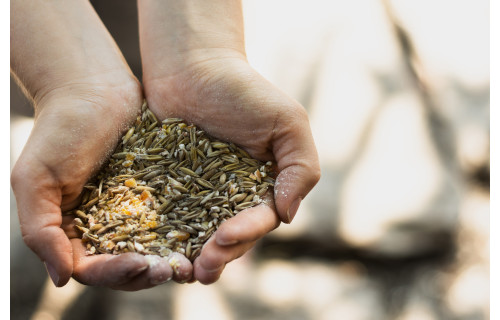
Currently, many farmers purchase certified sowing material already treated by the producer. On the other hand, sowing seeds from one’s own harvest from the previous year allows significant cost reduction. However, in order for initial savings not to ruin the chances of high yields, proper preparation of sowing material is necessary.
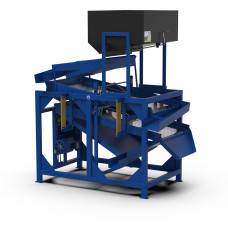
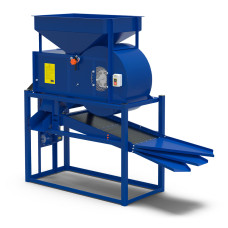
The preliminary stage is cleaning and sorting the grain. Seed calibration allows selection of only appropriately large seeds, free from impurities and weed seeds, enabling better use of the yield potential of a given variety. Only cleaned and calibrated seeds are suitable for treatment.
Due to more even seed coverage, wet treatment gives better effects than dry treatment. Liquid dressing should be applied only using a dedicated seed treater, preferably directly before sowing or at most several days in advance. The choice of seed dressing must be adapted to the cultivated plant and its most common and most dangerous diseases. Climatic and soil conditions, sowing date and crop rotation must also be taken into account.
The possibilities of using some plant protection products are limited by standards introduced by the European Union. The list of currently registered and approved seed dressings for individual species is available in the official search engine of the Ministry of Agriculture and Rural Development and in the Register of Plant Protection Products. The type of seed dressing must be adapted to the adopted farm strategy: only some dressings may be used in organic production. In the case of integrated production, the dressing must be included in the official list of products approved for integrated production for a given plant species. Seed treatment is classified as a plant protection treatment, therefore it should be entered into the register of agrotechnical treatments, mandatory among others for ARiMR eco-schemes and integrated plant protection.
Seed dressings should always be used according to the manufacturer’s recommendations regarding dosage, application of the preparation and, in the case of WT-type liquid dressings, the method of preparing the mixture. The treatment should always be carried out using a seed treater: only professional equipment guarantees tight seed coverage with a precisely determined amount of dressing.