Grain aerator (point grain dryer) – guardian of grain quality

Good harvests are the foundation of agricultural success – this is beyond doubt. It is a truism to say that virtually the entire development of agricultural technologies can be reduced to the issue of maximizing yields while simultaneously limiting labor input.
However, harvest is not the end of a farmer’s work. Proper storage of collected crops can also pose quite a challenge. This results from the fact that there is never a shortage of willing consumers for the fruits of farmers’ labor, and we are, of course, talking about all kinds of parasites and pests.
As proof that the problem of uninvited guests in granaries is as old as agriculture itself, we may consider, for example, the domestication of cats. It is no coincidence that our mouse-hunting companions appeared in human settlements precisely when prehistoric farmers began cultivating wheat and oats.
Today we know that for the crops stored by humans, far more dangerous than the infamous rodents may be much smaller yet ubiquitous pests – fungi and bacteria.
In the fight against their proliferation, technology supports us, including our today’s hero – the aerator.
Grain aerator – what is it and how does it work?
Grain aerator (point grain dryer) is a device used to aerate cereal grains, improving their quality by increasing enzyme activity and enhancing the “breathing” of the grain. The aeration process prevents grain spoilage, mold growth, fungal development and quality loss, which is particularly important during storage.
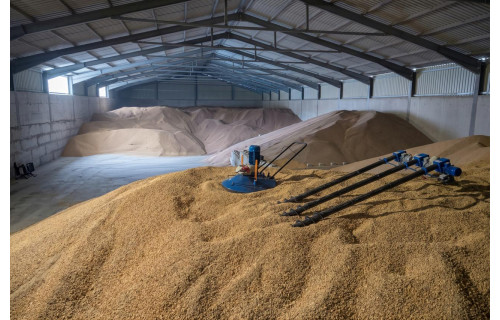
Aerators are commonly used in silos and grain warehouses, as well as in the milling industry. Electric grain aerators became widespread in the 1960s. The latest models, apart from their preservation function, are also equipped with systems for monitoring grain composition parameters such as moisture and temperature.
How does a grain aerator (point grain dryer) work?
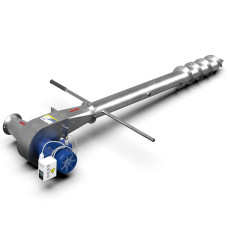
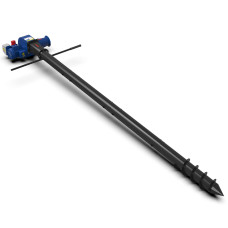
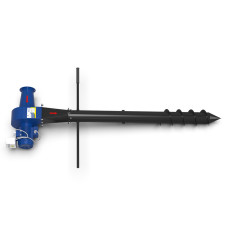
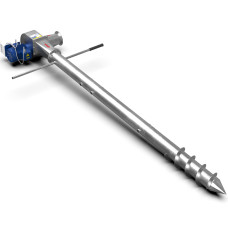
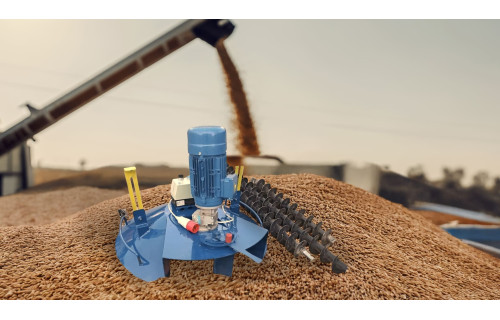
A grain aerator is an elongated device resembling in appearance a large, sharply pointed screw. Many names are used on the market for this equipment, including: point grain dryer, grain fan, cooling base, mobile chimney, and even rocket.
The most important components of an aerator are: electric drive motor, fan and blower pipe also called a lance.
The length of the lance varies depending on the aerator model and most often ranges from 1m to 6m.
Such a large size of the pipe results from the fact that it is the part of the device that is “immersed” in the grain pile to a depth of several meters, while the air intake mechanism and the motor remain above the surface of the grains.
The multi-meter lance introduces air drawn in by the grain dryer into the lower layers of the grain, which do not have natural “access” to air. To perform this function, the walls of the lance are perforated – this allows air to escape evenly to the sides through small holes. The size of the holes in the aerator pipe should be small enough to prevent grains from entering the blower from the aerated pile.
The lance also serves to move the grains. For this purpose, it is equipped with a spiral, trough-shaped thread. The drive motor generates rotation of the lance inside the grain pile. It works in a similar way to the mortar mixer popular in the construction industry. The rotation of the lance is fast; for example, for models of KOZAK grain dryers available on our website, it can reach 3000 rpm, i.e., 50 rotations per second. Thanks to this, cereal grains remain in constant motion and their drying proceeds evenly.
Why is it worth using grain aerators?
The use of grain aerators is crucial because the aeration process improves grain quality by preventing the development of pathogenic microorganisms. Grain moisture above 14.5% promotes the growth of molds, fungi and bacteria such as Aspergillus and Fusarium, which can cause the formation of mycotoxins – substances harmful to both animals and humans.
In 1942–1943 in the USSR, hundreds of people died as a result of consuming flour contaminated with mycotoxins. The poisonous flour came from grains that had remained in the fields over winter, absorbing moisture and becoming moldy before harvest. The culprit of that disaster was the fungus Fusarium and the trichothecenes it produced. In more recent history, it is worth mentioning a study conducted in 1982 in the United Kingdom, where the trichothecenes responsible for the deaths of many Russians four decades earlier were detected in more than half of the sampled breakfast cereals.
It should also be emphasized that poisoning with mycotoxins formed as a result of improperly stored grain is not merely a song of the distant past. Cases of local epidemics are still recorded today, especially in less developed regions of the world.
Feed made from fungus-infected grains affects the fertility of farm animals as well as their overall health condition. This can have a direct impact on breeding efficiency.
Thanks to continuous ventilation using an aerator, the air supplied to the grain changes microbiological conditions, limiting the growth of these harmful microorganisms.
Aeration also affects the activity of enzymes in the grain, such as amylases and proteases, which are responsible for the breakdown of starch and proteins. As a result of aeration, these enzymes become more active, which improves the nutritional properties of the grain and accelerates its metabolic processes. This action also supports grain storage, as it improves its chemical stability and reduces the risk of quality deterioration due to undesirable enzymatic reactions.
It is also worth emphasizing that the aeration process lowers the level of carbon dioxide, which in excess may promote the development of anaerobic bacteria.They can cause fermentation and grain spoilage. Thanks to aerators, a stable oxygen level is maintained in the grain mass, which helps preserve the health and quality of the crops.
If you are interested in the topic of balanced feeding of farm animals and increasing the nutritional value of feed, check out our article on feed production.
In summary:
Grain aerator (dryer) is a device that despite its relatively low price can prevent losses many times exceeding its cost. In this context, purchasing a high-class aerator constitutes a cost-effective investment. As I hope to have demonstrated, fungi and bacteria developing in granaries are invisible saboteurs of our crops and a threat to the health of humans and animals.
Preventive use of grain dryers is a better form of combating fungi and bacteria than using chemical agents once they have already developed.
(source: Mycotoxins – an invisible threat, Joanna Kurek, April 2022)