Where there’s wood chopping… there can also be pellet production
Forests cover nearly 30 percent of Poland’s surface area. They constitute our national treasure and define the character of the Vistula landscape. The issue of responsible management of these areas has for years been the subject of political, ecological, and ideological disputes.
Nevertheless, forests still remain a source of one of the most universal raw materials known to mankind - wood.
Since wood is by nature a slowly renewable resource, it is in our interest to seek solutions that allow for the most efficient use possible of the raw material obtained during logging. Here, wood-derived fuel production technology may prove helpful - such as pellet or briquette.
Let’s take a closer look at this.
1. Logging waste and its applications
Forest logging generates various types of waste, including tree residues such as branches, bark, or limbs, which are not used for timber production.
This results from the fact that purchasing centers are most interested in tree parts such as trunks, logs, and beams of suitable diameter and length, appropriate for industrial processing.
Other waste includes leaves, undergrowth vegetation, and smaller plants that are destroyed during logging.
Fortunately, the above-mentioned “waste” has great energy potential and is perfectly suitable for the production of so-called biomass fuels.
Here are the two most popular ones:
Pellet
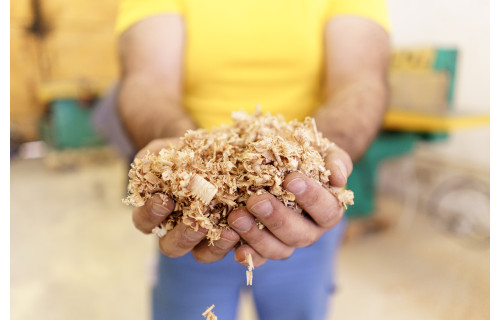
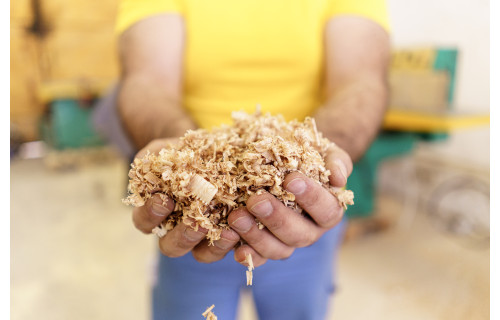
All kinds of shavings, wood chips, or branches form the basis for the production of pellets - a high-energy fuel in the form of granules.
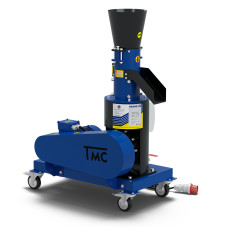
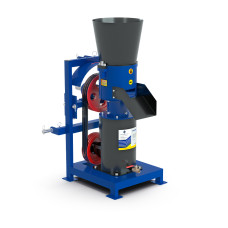
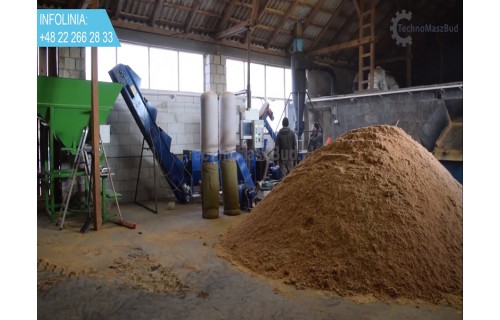
A so-called pellet mill is necessary for this process. Inside it, the biomass is ground and then subjected to high temperature and pressure. After cooling, the fuel is ready for use in furnaces equipped with a pellet burner. The energy value of pellet made from wood shavings oscillates around 18 MJ/kg, and its advantage over untreated wood is the low production of smoke and ash, as well as ease of dosing.
Briquette
The second popular way of using biomass is briquetting. The advantage of a device used for producing briquettes, a briquetting machine, is its greater “tolerance” for various types of waste. While almost exclusively wood-derived waste is suitable for pellet production, leaves, grass, roots, etc. can also be used for briquette extrusion.
Such mixed briquettes are admittedly slightly less energy-efficient and produce more smoke, but they are suitable for firing universal boilers and even coal furnaces with adjustable air supply. In this respect, they are much more versatile than specialist pellets.
2. Wood-derived waste - the basis for biomass fuels
- Sawmill waste
Once the trees cut down in the forest are loaded onto a truck and the smaller branches are collected, the trunks intended for further processing set off on their way to the sawmill.
It is there that irregular beams are transformed into even boards.
The by-product of this processing is, as one might easily guess… wood-derived waste.
Sawmill shavings and sawdust are the best raw material for the production of high-quality pellets and briquettes.
- Waste from further wood processing
Finished boards from the sawmill are distributed to private individuals, wholesalers, and various manufacturing plants.
These include furniture workshops, large industrial plants, and all kinds of factories.
At this stage of wood processing, as a result of sanding, shaping, and cutting, a considerable amount of shavings and wood chips is also generated.
Wise management of these residues assumes their optimal use.
The production of pellets or briquettes is precisely such a solution.
- Household waste
By running our own household, we also produce a certain amount of wood-derived residues. These may include old furniture, unusable tools, fence fragments, damaged euro pallets, low-quality boards, and similar items. All uncoated and unglued wood is suitable for pelletizing or briquetting. Such a solution allows us to get rid of accumulated material while simultaneously saving money, or even earning from the independent production of fuel.
It is worth remembering, however, that any potential sale of biomass fuels, including pellets, briquettes, or other forms of biomass, may require compliance with specific legal requirements.
To learn more about independent biomass fuel production, also check our other article