Interesting facts about grain – how wild grass changed the fate of the world

A few years ago, historian and essayist Yuval Noah Harari suggested in one of his books a vision of a reversed history of our species. According to his provocative thesis, it is grains that have been “cultivating humans” for thousands of years.
This concept – admittedly somewhat designed to attract media attention – was supported by arguments that are difficult to refute. Harari claimed that Homo sapiens adapted their lifestyle, habitat, daily rhythm and even belief systems to the needs of the cereal plants they cultivated.
In the long-term model of coexistence between two species, in which one fundamentally adjusts its entire way of functioning to the needs of the other, Harari sees a certain kind of “subordination” of humans to grain.
However, the historian’s thesis is revolutionary only in terms of terminology – more precisely, in the definition of the word “to cultivate.” Beyond the catchy and paradoxical aphorism that somewhat reverses our position in relation to cultivated plants, Harari presents a rather obvious fact – humans have depended on grain for thousands of years.
At this level, the historian’s thesis is merely a truism wrapped in a catchy slogan.
1. Wild grasses
Today’s cereal crops are descendants of wild grasses that once grew in various parts of the world. Their “domestication” was a long process that occurred independently on different continents. For the history of our part of the world, the most important developments took place in the area of present-day Asia Minor around the 8th century BCE. It was there that people learned to cultivate the most important grain for our region – wheat. It is from the so-called Fertile Crescent that emmer wheat originates, considered one of the oldest wheat varieties in the world.
Today, when slicing your favorite bread before breakfast, it is worth remembering that its existence is owed to some unknown inhabitant of the Middle East who, ten thousand years ago, became interested in the inconspicuous ears of wild grass sticking out chaotically among shrubs somewhere in a sun-scorched clearing in what is now Turkey.
2. Sacred grains
When our ancestors put aside spears and bows and collectively took up ploughs and hoes, they made their survival dependent on the abundance of harvests. Their life and prosperity depended on the sun, rain and soil fertility. It is therefore no surprise that many religious symbols of the first farmers were directly connected with the fruits of the Earth. The Greek Demeter, the Egyptian Osiris or the Celtic Cernunnos are examples of deities believed to be responsible for successful harvests and abundant plant growth.
In the culture of the ancient Maya, it was even believed that the first humans were shaped by the gods from corn dough. With the development of agriculture, human dependence on the seasons and cycles of nature also increased. It is no coincidence that today’s Christmas or Easter fall around the winter or spring solstice. These are remnants of the holidays of our ancestors, who celebrated the beginning and end of winter as well as the arrival of summer, which today coincides with St. John’s Night. The relationship between grain and religion is also present in the Catholic Church. According to Roman Catholic practice, the so-called body of Christ is received during Mass in the form of bread. In Easter baskets, bread occupies the most important place, and many of us begin Christmas Eve by sharing unleavened wafer – directly derived from bread. Even in secularized societies, bread enjoys great respect.
We are reminded of the cultural significance of grain products when, leaning over a trash bin, we casually throw away leftover vegetables or fruit, but when a slice of bread is about to end up there, something prevents us from condemning it to that fate.
3. A grain landscape
Imagine driving through Central Europe. The road leads us through wide fields of wheat and rye. Impatiently, we overtake tractors and combine harvesters. We pass villages and small towns. On the horizon we see windmills – wooden structures that for years served to grind grain. We cross a bridge over a river located near an old mill – it was there that grain turned into flour. A road sign directs us toward a city. The first thing that emerges are old city walls. For years they protected the settlement’s wealth. Further on, we see the waterfront, a river port and granaries – large warehouses for grain. Next to them are barges. Once they transported grain along the river; today they are more of a tourist attraction, but the old canals are still in use.
The landscape described here is not any specific place, but rather an averaged image of Central Europe – a region whose primary economic branch for years was grain cultivation. The cultivation, processing and distribution of cereal crops have permanently shaped the character of our region and defined the appearance of towns and villages, social relations and politics.
4. Climate change
Our ancestors often fell victim to extreme weather events that affected the abundance of harvests. Some historians even trace the origins of certain 17th-century military conflicts in Europe to poor harvests caused by the so-called Little Ice Age. Could the Swedish Deluge, which so severely devastated our state, have been the result of a one-degree Celsius drop in average temperature in the second half of the 17th century? These are far-reaching connections and simplifications are easy to make.
There is no doubt, however, that climate fluctuations cause difficulties in cereal cultivation, which in turn trigger further crises. So how are modern farmers coping today, in an era of growing awareness and increasingly noticeable effects of climate change?
They are trying to implement necessary changes.
These include increased frequency of extreme weather conditions such as droughts, heatwaves, heavy rainfall and temperature fluctuations. Rising average temperatures can shorten the growing season, negatively affecting yields, especially in regions that previously had a stable climate.
In response to climate change, farmers use innovative cultivation methods. They introduce new drought-resistant plant varieties capable of surviving in harsher conditions. Irrigation technologies are becoming more precise and efficient to better use limited water resources. Sustainable farming methods, such as no-till agriculture, help maintain soil moisture and reduce erosion.
In some regions, climate change may even favor crop development in new areas that were previously too cold, such as northern regions of Russia or Canada, where new grain cultivation zones are beginning to emerge.
Environmental changes also require governments to adapt agricultural policies to support farmers in adjusting to changing climatic conditions.
It should be remembered, however, that agricultural technology does not develop evenly across the planet. In some less advanced regions, farming technology has remained unchanged for hundreds of years, while other parts of the world boast high levels of automation and crop efficiency.
5. In conclusion
Although at first glance we seem far removed from the first Sumerian farmers sweating as they irrigated their wheat fields, in fact, despite the passage of thousands of years, our dependence on grain has hardly diminished.
Take, for example, the modern American.
He goes for his not-so-healthy lunch to one of the fast-food restaurants with a big “M” in its logo. He orders a burger, nuggets and a Coke. What does he get on his plastic tray?
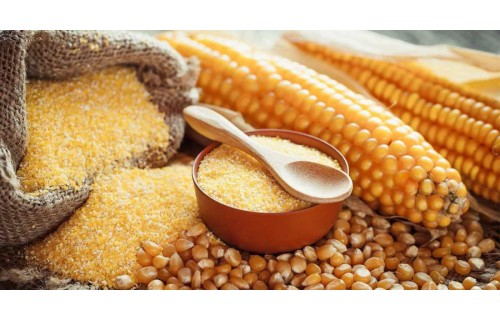
A wheat bun – clearly a grain product. Inside the bun: a piece of meat fried in soybean oil. Grains: 1, legumes: 1. The meat comes from a cow that, besides its favorite grass, regularly consumed corn feed. Time for a bite of a nugget. The breading based on wheat flour gives them crispiness. Chickens on farms are also fed grain-based feed – in the USA most often corn-based. Just one sip of Coke – sweetened with glucose-fructose syrup derived from corn. That was not a healthy lunch – for dinner maybe something less fatty – for example sushi, cooked grains wrapped in seaweed.
Grain cultivation remains the foundation of agriculture and a key element of the economy in many countries around the world. Although technologies, production methods and market requirements change, farmers continue to play an extremely important role in providing food and raw materials not only for people but also for the feed industry. Modern cereal cultivation requires adaptation to new challenges such as climate change, the growing need for sustainability and efficiency.
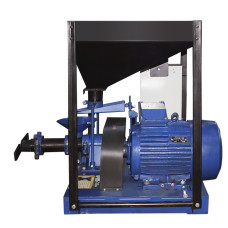
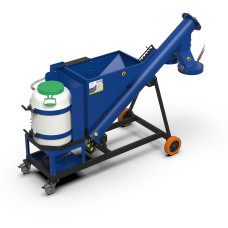
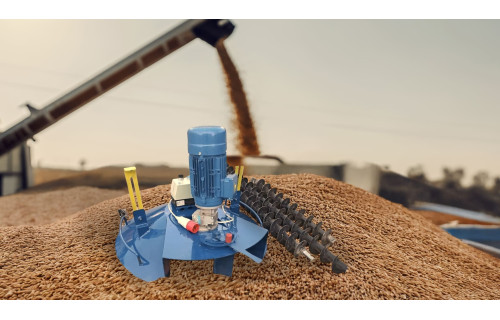
Farmers introduce innovative technologies, invest in modern machinery and modify agrotechnical methods to maintain high crop quality despite changing conditions. In the process of preparing grain, they use seed treaters, which protect sowing material from diseases and pests. During storage they use grain aerators, which ventilate cereals and prevent spoilage, ensuring proper storage conditions. Extruders allow grain to be turned into more valuable feed, increasing its digestibility and nutritional value. Their work is invaluable, as thanks to their efforts access to essential resources that drive the global economy is ensured.
It is unclear whether as a species we are “cultivated” by grain, but there is no doubt that we depend on it.