Pellet prices in 2025 – comparison

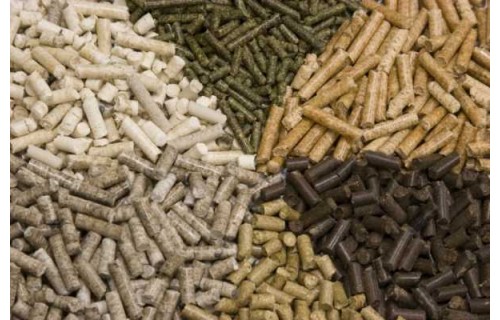
Pellet is a fuel that has been gaining significant popularity for several years. This is due both to the instability of fossil fuel markets and to growing environmental awareness. The increasingly noticeable problem of air pollution is also not without significance.
Biomass fuels, such as pellet, are considered an effective weapon in the fight against troublesome smog, which residents of Polish cities and villages face every winter.
However, a low carbon footprint is not the only factor influencing consumer decisions of single-family homeowners. It is absolutely understandable that when choosing a way to heat their households, Polish women and men look for solutions that are both ecological and inexpensive.
So let’s check: How much does pellet cost in 2025?
We have collected the prices of the most popular pellet producers and compared them.
Current pellet prices
For a ton of pellet in 2025, we may pay from 1300 to even 2600 PLN. The price differences are mainly determined by the pellet class and the type of distribution.
We distinguish ENplus A1, A2, and B pellets – depending on moisture content, ash production, as well as other parameters related to efficiency and exhaust emissions.
To learn more about this, check our pellet guide.
It is worth noting that we will pay the most for pellet in DIY stores or multi-industry shops, where the fuel is sold retail. Online pellet traders advertising on sales platforms also charge high prices.
Available online offers for bagged pellet show that the intermediary’s margin may exceed even 50% of the wholesale price.
Therefore, purchasing pellet from a wholesaler is much more cost-effective.
Popular pellet producers – current prices (gross)
Radziszewski Pellet – price 2025
ENplus A1 class wood pellet from Radziszewski sawmill – price (March 2025)
Price per pallet (950 kg, 65 bags of 15 kg): 1250 PLN
Price per ton: 1316 PLN
Olczyk Pellet – price 2025
Pellet from Olczyk sawmill, ENplus A1 class – price (March 2025)
Price per pallet (950 kg, 65 bags of 15 kg): 1319.50 PLN
Price per ton: 1339 PLN
Lava Pellet, Stelmet S.A – price 2025
Lava wood pellet produced by Stelmet – price (March 2025)
Price per pallet (975 kg, 65 bags of 15 kg + surplus): 1487.07 PLN
Price per ton: 1525 PLN
Barlinek Pellet – price 2025
Barlinek wood pellet ENplus A1 – price (March 2025)
Price per pallet (950 kg, 65 bags of 15 kg): 1630 PLN
Price per ton: 1716 PLN
Feniks Pellet – price 2025
Feniks premium ENplus A1 softwood sawdust pellet – price (March 2025)
Price per pallet (975 kg in 15 kg bags): 1369 PLN
Price per ton: 1404 PLN
Feniks gold ENplus A1 softwood sawdust pellet – price (March 2025)
Price per pallet (975 kg in 15 kg bags): 1449 PLN
Price per ton: 1486 PLN
Mazur Pellet – price 2025
Mazur pine pellet ENplus 1 – price (March 2025)
Price per pallet (950–975 kg, 65 bags of 15 kg): 1290 PLN
Price per ton: 1357 PLN
Note! The above prices do not include delivery costs.
Pellets in DIY stores
The most popular DIY stores also sell pellet retail.
Their offer is aimed at people with low fuel demand, and pellet prices are significantly inflated. For example:
A 15 kg bag of Feniks pellet, ENplus 1 class, in the OBI store chain can be purchased for 39.99
PLN. This means that a ton of pellet at this price would cost 2640 PLN.
For comparison, the cheapest pellet from OBI can be purchased in a 15 kg bag for 22.46 PLN.
In Leroy Merlin, prices for a bag of pellet start from 22.97 PLN for A2 class pellet, while the most expensive pellet (ENplus A1) costs 26.99 PLN per 15 kg in this store.
In Castorama, we will pay 22.98 PLN for a bag of ENplus A1 pellet, and pellets available in this chain are priced in the range of 22–24 PLN per bag.
Own pellet production – saving money
An alternative to buying pellet from a wholesaler is producing fuel on your own.
Contrary to appearances, it is not complicated at all. For this purpose, we need a so-called pellet mill, which is an easy-to-use machine that, using high temperature and pressure, turns biomass into pellet granules. Various types of biomass can be used for pellet production, such as: wood shavings, smaller branches, wood chips, sawdust, straw or seed husks. The material introduced into the device is ground, compressed, and then extruded into cylindrical particles. After cooling, the pellet is ready for use.
Independent pellet pressing is an optimal solution for farms generating large amounts of natural waste. Self-production of pellet fits into the trend of responsible management of agricultural and processing residues.
Fuel of your own production also allows independence from price fluctuations and supply chains.
More on this topic about own pellet production can be found here.
To sum up:
Pellet prices are one of the more important factors when choosing a fuel supplier.
However, it is worth remembering that in the case of suspiciously attractive offers from little-known producers, one should make sure that the fuel meets the appropriate standards.
Low-quality pellet may negatively affect the condition of our burner and pellet boiler, and tempting savings may over time turn out to be a source of costly repairs.
It should also be borne in mind that every intermediary between the producer and the pellet user increases the fuel price. The internet is full of clever distributors charging substantial margins. Whenever possible, it is best to contact the producer directly or the official distribution partner of a given sawmill.