Modern agriculture and the agri-industry are based on advanced technological solutions. It is therefore no secret that a well-composed equipment arsenal is currently the foundation of a profitable business. As you have probably noticed, on our blog we often take a look at the development of modern agricultural machinery. This time will be no different. Today we will take a closer look at hammer mills.
What are they used for? Why are they versatile? Is it worth using them?
It is time to take a closer look at this.
What is a hammer mill?
To begin with, a small reminder.
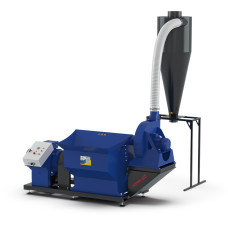
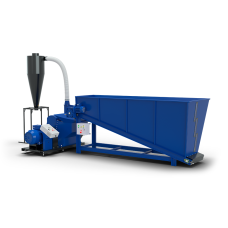
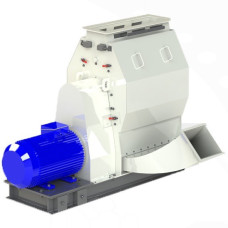
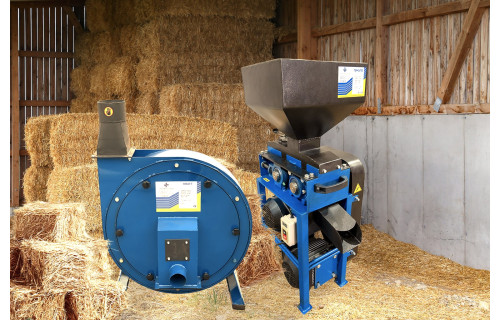
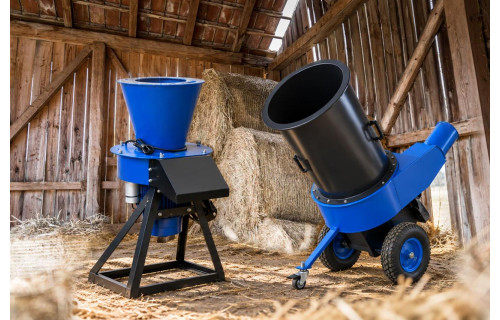
A hammer mill is a type of size reduction device in which the basic working element is a rapidly rotating rotor equipped with hammers,(to which the device owes its name). The material fed into the mill enters the working chamber, where it is subjected to the impact of the rotating elements, and then passes through a screen with an appropriate mesh size. As a result, larger pieces of material are gradually reduced to the required size. The selection of the appropriate screen makes it possible to influence the final fraction of the obtained product, thanks to which the mill can be adapted to a specific application.
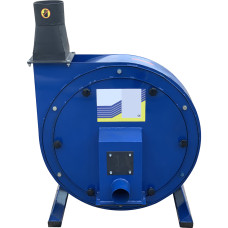
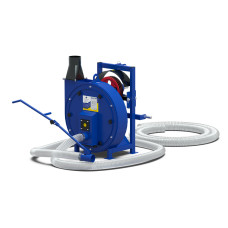
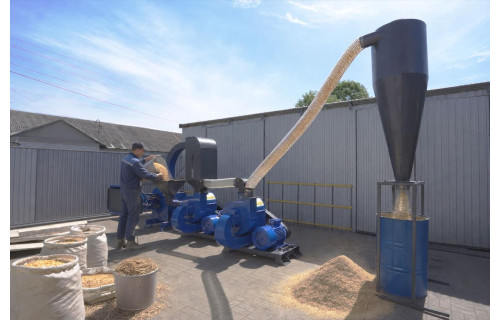
An important feature of some hammer mills is also their suction-pressure function. The device can simultaneously be responsible for suctioning in the material being reduced and transporting the obtained fraction to the next stage of the technological process. Such a solution makes it possible to combine size reduction and transport of the raw material in one device.
Applications of hammer mills
The range of applications of devices of this type of hammer mills is quite impressive. Hammer mills can be found, among others, in the wood industry, food industry, agriculture, feed industry, as well as in selected processes of the chemical, pharmaceutical and cosmetics industries.
Hammer mills can play an important role in material preparation processes for further processing. Reducing the raw material increases its uniformity and may facilitate subsequent production stages.
An example is the preparation of biomass for pellet production. Properly reduced sawdust, wood chips or other materials can constitute raw material for further processing in pellet mills or granulators.
Hammer mill – more than an ordinary shredder
As I have already mentioned, the basic task of a hammer mill is to reduce the size of the material. However, this does not mean that every device of this type performs exactly the same job.
A properly selected mill can be used for reducing raw materials with different structures and properties. In practice, these may include, among others, grain, wood chips, sawdust, shavings, pieces of bark, veneer or fine waste generated during wood processing and the production of wood-based materials. Other products of plant origin may also be subject to size reduction.
What determines the versatility of a mill?
Not every hammer mill will work in an identical way. The capabilities of a specific device are determined, among other things, by:
- the design of the working chamber,
- the type and arrangement of hammers,
- the rotor speed,
- the drive power,
- the screen used,
- the method of material feeding,
- the method of collecting the reduced raw material,
- the properties of the processed material.
The expected capacity is also important. The size reduction of small quantities of raw material will require different parameters, and an installation operating for many hours and processing large quantities of material will require others.
The proper selection of the device therefore makes it possible to use its capabilities much more broadly than only for simple grinding.
How to choose the right mill for your needs?
Hammers are selected according to the type of material
As is not difficult to guess. Not every material behaves in a hammer mill in the same way. For example: salt is brittle and easily breaks apart under impact, while fresh wood has a fibrous structure and is a very resilient material. Grain, sawdust, or wood chips also require a different approach to the size reduction process.
Not only the power of the mill itself is important, but also the design of its working elements. Hammers may differ, among other things, in shape, thickness, weight, material of manufacture, and method of mounting. These parameters are selected depending on the properties of the processed raw material and the expected fraction.
In the case of brittle materials, e.g. minerals, it is important to obtain controlled size reduction without unnecessarily generating an excessive amount of very fine fraction. In turn, when reducing wood or wood chips, an appropriate effect on the fibrous material is needed, as it does not break apart as easily as brittle material. In this case, the durability and wear resistance of the hammers as well as appropriately selected impact energy may be of greater importance.
However, this does not mean that a completely different mill is required for each raw material. The versatility of the device is influenced by the possibility of properly configuring its working elements and operating parameters. The selection of hammers, screen, rotor speed and material feeding method makes it possible to adapt the size reduction process to the properties of a specific raw material.
Suction-pressure function - an additional advantage
A particularly interesting function of some hammer mills is the possibility of operating as a suction-pressure device.
In such a solution, the mill not only reduces the material, but also uses airflow to suck it in and transport it. This means that the device can perform several functions simultaneously within one technological process.
The raw material is sucked into the device, then it enters the grinding chamber, where it is reduced, and later it is transported further. Thanks to this, the mill can constitute not only a single machine for size reduction, but also an element of a larger technological system.
This is particularly important in the case of light and loose materials, such as sawdust, wood chips or other products of wood origin.
Why is it worth using hammer mills?
Hammer mills make it possible to efficiently prepare raw material for further use, and in suction-pressure versions they can additionally combine size reduction with its transport. Their great advantage is flexibility – appropriate configuration of the device makes it possible to use it with various materials and processes. Thanks to this, one mill can find application in many tasks, without the need to use separate devices for each type of raw material.