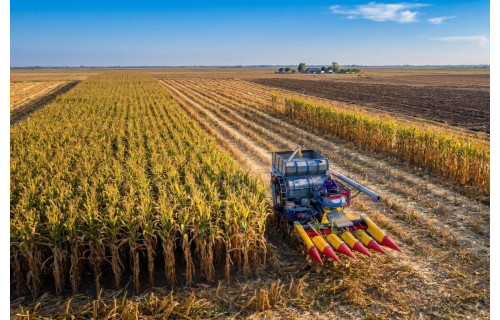
Corn is one of the most widely cultivated crops in the world, both in terms of sown area and harvest volume. It is also extremely popular in Poland. No wonder! Corn tolerates heat waves and uneven rainfall better than other cereals. Due to the late sowing date, it is often sown as a replacement for crops destroyed by spring frosts. The exceptional versatility of this plant means that the harvested crop can be used in very many ways. On the other hand, the competition is considerable.
Corn cultivation in Poland - statistics
Poland is currently one of the key producers and exporters of this yellow grain in the European Union. In 2025, the total area of corn cultivation in Poland (for grain and green fodder) covered as much as 1.9 million ha, which gives us third place in Europe. Domestic harvests of this species reached the highest level in history. According to Statistics Poland data, the average corn grain yield amounted to over 7.8 t/ha, and the total harvest was estimated at 10.5 million tonnes. In addition, there are over 31 million tonnes of corn for green fodder.
In 2026, more records are being set. The total corn sowing area is estimated at 2 million hectares, of which 1.36 million ha is grain corn. The harvest is fast approaching. The sweet corn harvest is already underway, at the end of August it will be the turn of green fodder, but the highlight of the program falls at the end of September and October: then tractors and combines will head en masse to the fields for golden ears of grain corn. The yields are expected to be abundant - it is high time to consider what to do with surplus corn?
Corn purchase – grain prices in 2026
The first thought of most farmers is sale to a purchasing point. Currently, the prices of last year's dry corn grain, depending on the region of the country, range from 700 PLN to 950 PLN per tonne. Contract rates for the new harvest are at a similar level and prices at purchasing points in autumn will probably be close to current ones. Wet corn grain is always much cheaper, its current average contract price oscillates around 550 PLN/t. Meanwhile, according to expert estimates, the profitability threshold is approx. 850–900 PLN/t for dry grain and 500–550 PLN/t for wet grain. Below these rates, the farmer loses money, because the costs associated with corn cultivation exceed the profits.
In autumn, just after the harvest, grain prices are usually slightly lower than those that can be obtained for the same raw material after a few months. The market is then oversupplied with surplus crops, so the buyer dictates the terms. Sometimes it is worth waiting a bit in order to sell the grain at a higher price later. In other words, it is worth allocating part of the corn grain harvest for storage.
Storage of corn grain – time works in the farmer's favor
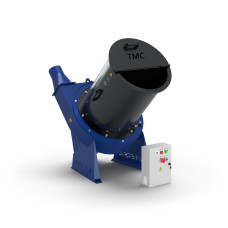
Storing corn requires proper preparation of the grain before placing it in a warehouse or silo. Directly after harvest, the moisture content of the raw material is high, especially if the autumn weather does not spare the rain. Fresh, wet corn grain, with a moisture content of around 30%, is susceptible to mold and starts to spoil quickly. Therefore, quick drying after harvest is of key importance. If the corn grain is to be stored for more than 6 months, its moisture content must be reduced to 14%. An excellent solution is a mobile grain dryer, which is also suitable for drying other raw materials, including corn grain. These mobile units can be placed directly next to the farm or warehouse, without the need to build foundations. The drying capacity is very high: reducing the moisture content of 14 tonnes of corn grain from 30% to the recommended 14% takes only about 4 hours. After this process is completed, the grain mass will decrease to about 11.5 tonnes, but at the same time its potential purchase price will increase - dry grain is much more expensive than wet grain! Dry raw material that is not sold immediately can go into storage, to safely wait until an opportunity arises to make a golden deal on golden corn grain.
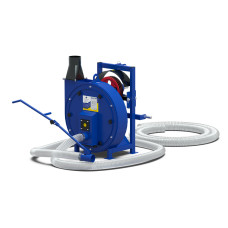
Note: during storage, corn requires regular inspection. Excessively high temperature or humidity in the warehouse favors the development of pathogens. A threat is also posed by hot spots forming inside the pile, resulting from biophysical processes taking place in the grains. In order to extend the possible storage time of the raw material without loss of quality, proper air circulation inside the pile should be ensured through aeration. The device used for this purpose is an aerator, which reliably aerates the grain, dries it, and additionally stabilizes its temperature.
Corn feed in 3 ways
Corn is a very important feed crop - this applies not only to corn grown for silage, which is the basic feed for dairy cattle. Corn grain is rich in starch and constitutes a high-energy raw material for the production of feed for poultry, cattle and pigs. The high carotenoid content in corn grain is a particular advantage in the case of laying hens: carotenoids intensify the color of egg yolks and improve poultry laying performance.
The preparation of valuable corn feed requires proper grain processing. There are several possibilities.
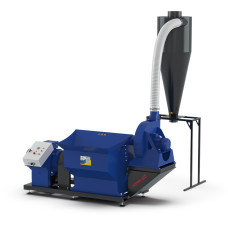
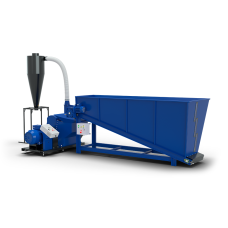
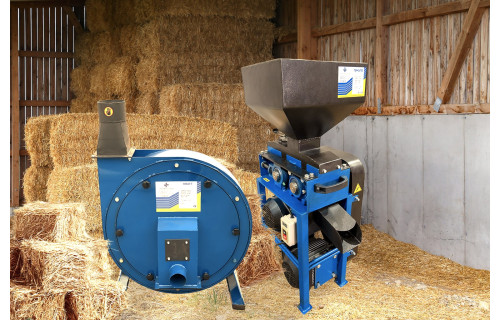
- Grinding – corn grain ground with a grain grinder is ideal feed for poultry.
- Crimping - grains crimped using a grain crimper become more easily digestible for livestock, which improves feeding efficiency. It is especially recommended as feed for cattle, because it stimulates rumination and saliva secretion, minimizing the risk of acidosis.
- Extrusion – this is a way to prepare feed of the highest quality, with digestibility reaching as much as 90%! Corn grain processed using an extruder under the influence of high temperature and pressure gains a porous structure and, above all, becomes much easier to digest. Moreover, this treatment eliminates antinutritional factors and pathogens, thanks to which the feed becomes fully safe even for young animals. Extruded corn is included in many feed mixtures for practically all livestock and fish. It is also used in angling as exceptionally effective bait.
Extruded grain can be used on one's own farm or sold. The average wholesale price of extruded corn currently ranges from 2500 PLN to 3500 PLN per tonne. Thus, thanks to the use of an extruder, the value of the initial raw material can be increased 3-4 times!
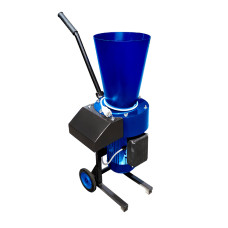
- Pelletizing – corn pellet, produced using pellet mills, can be made both from dry grains alone and from whole plants: cobs, stalks and leaves. The latter is especially recommended as roughage for horses. In turn, corn grain pellet is a valuable feed for farmed fish, and can also be used as bait.
Food industry – not only corn flour
Corn is widely used in the food industry. Dry grain is a raw material for the production of flour, groats, grits, starch and glucose-fructose syrup, as well as oil. Each of these basic corn products can then be used in many different ways, including for the production of breakfast cereals, bread, puffs, sauces and sweets. Numerous food industry plants located throughout the country offer corn grain purchasing or contract purchase.
Corn oil
Corn grain consists mainly of starch, but also contains approx. 5% fat, which is located mostly in the germ. For this reason, corn oil is not pressed from whole grains, but precisely from the germs. Their separation is not difficult: the simplest method involves moistening dry corn grains, mechanically grinding them using a hammer mill with a 6-8 mm screen and separation using a sieve separator. Nothing goes to waste: the ground endosperm can be used as feed, while the germs can be pressed using an oil press.
Cold-pressed corn oil is rich in unsaturated fatty acids, especially linoleic acid. It is also a valuable source of bioactive substances such as phytosterols, carotenoids and vitamin E. It is widely used in cooking, and may also be consumed for medicinal purposes. In pharmacies and health food stores, its prices start from approx. 40 PLN per liter.
Bioethanol from corn
Corn grain is a valuable raw material for the production of bioethanol, which is widely used in the fuel, chemical and cosmetics industries. In the case of high-starch varieties, more than 400 liters of pure bioethanol can be obtained from 1 tonne of dry corn grain. In Poland, it is currently produced by more than a dozen companies. The largest domestic producer of bioethanol from corn is Bioagra, located in the Opole Voivodeship. Other giants in this industry include Grupa AWW, Ima Polska S.A., BGW and Destylacje Polskie.
Corn for fuel
Dry corn grain can be used as fuel. The calorific value of this raw material ranges from 14-16 MJ/kg. During combustion, a negligible amount of ash is produced, much less compared to coal. Note: burning corn is possible only in specially adapted furnaces. This does not apply to corn pellet, which can be burned in any pellet stove. Corn fuel pellet can be produced using a pellet mill both from dry post-harvest residues, i.e. corn stalks and leaves, and from whole plants or grain alone.
The possible uses of corn grain are enormous, and after drying this raw material is suitable for long-term storage. Thanks to this, if the purchase price does not meet expectations, the farmer has many other possibilities for selling or using their golden crops on their own farm.